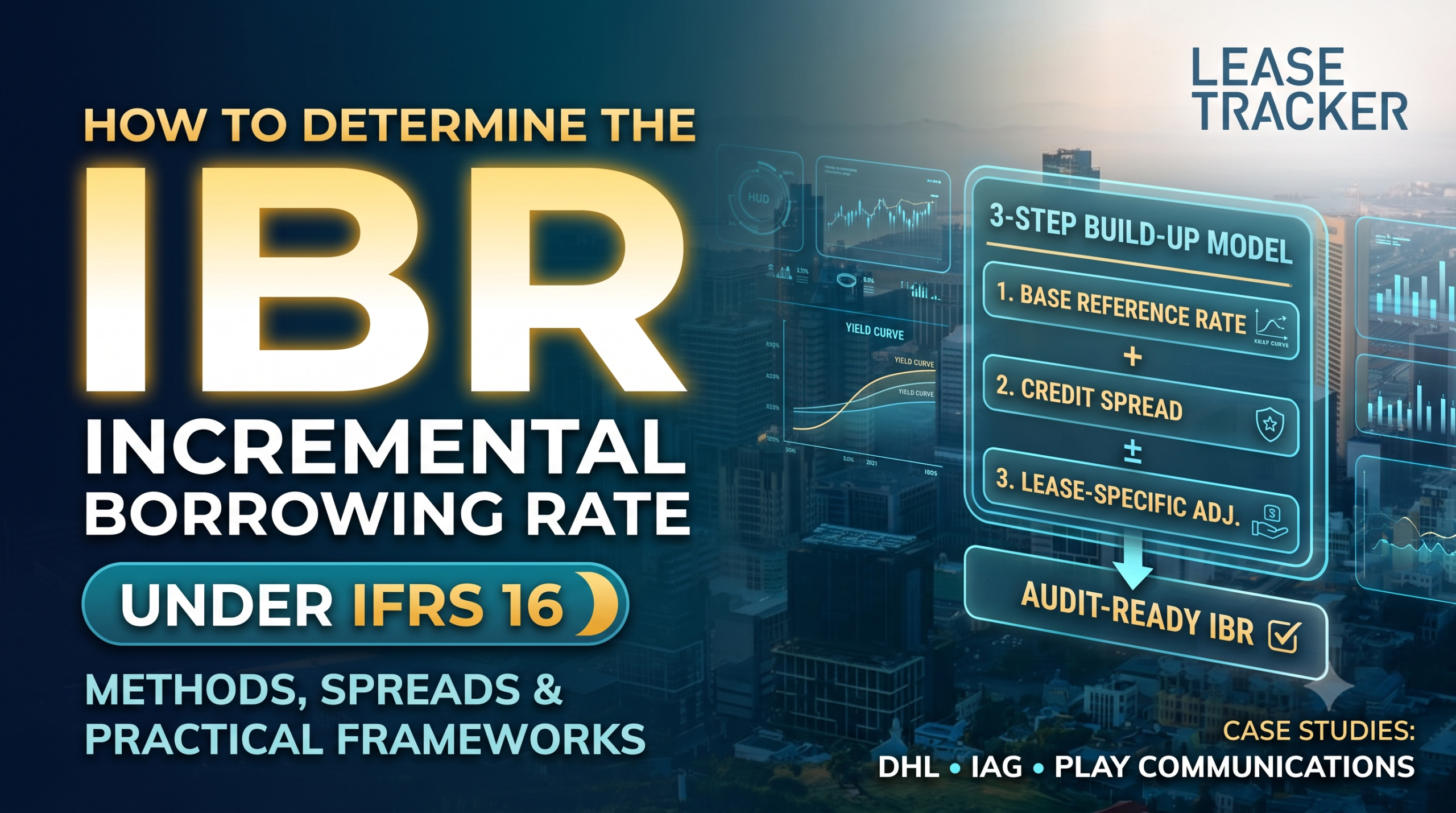
Determining the Incremental Borrowing Rate (IBR) Under IFRS 16: Practical Frameworks, Estimation Models, and Audit-Ready Case Studies
1. The Critical Role of Discount Rates in IFRS 16
Under IFRS 16, the discount rate is the mathematical anchor of lease accounting. Paragraph 26 mandates that at the commencement date, a lessee must measure the lease liability at the present value of lease payments not paid at that date.
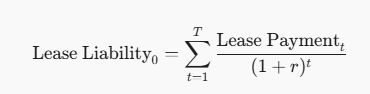
Because the recognized Right-of-Use (ROU) asset directly mirrors the initial lease liability (adjusted for prepayments, incentives, direct costs, and restoration provisions), selecting this discount rate (r) dictates the day-one balance sheet impact. A minor variance of 50 to 100 basis points in the discount rate materially swings:
- Capitalized gross assets and interest-bearing liabilities.
- The timing and front-loading of net profit charges (depreciation vs. interest expenses).
- Key leverage metrics, including Debt-to-Equity and Net Debt-to-EBITDA.
The Standard Hierarchy: Implicit Rate vs. IBR
IFRS 16 establishes a strict two-tier hierarchy for determining the discount rate:
             IFRS 16 DISCOUNT RATE DETERMINATION HIERARCHY
             ═════════════════════════════════════════════
          Is the Interest Rate Implicit in the Lease readily determinable?
                                   │
                    ┌──────────────┴──────────────┐
                   YES                            NO
                    │                             │
                    ▼                             ▼
           Apply Implicit Rate          Apply Incremental
           (Mandatory if known)       Borrowing Rate (IBR)
- The Rate Implicit in the Lease: The discount rate that causes the present value of (a) lease payments and (b) unguaranteed residual value to equal the sum of the fair value of the underlying asset and any initial direct costs of the lessor.
- The Incremental Borrowing Rate (IBR): Applied whenever the rate implicit in the lease cannot be readily determined.
In the vast majority of commercial leases—particularly real estate, plant, and fleet contracts—the implicit rate is unavailable to the lessee because it requires proprietary lessor inputs (such as the lessor’s internal profit margin, initial direct costs, and unguaranteed residual value expectations). Consequently, determining a defensible IBR is an operational necessity for lessees under IFRS 16.
2. Defining the IBR: The Four Core Pillars
Paragraph Appendix A of IFRS 16 defines the Incremental Borrowing Rate as:
“The rate of interest that a lessee would have to pay to borrow over a similar term, and with a similar security, the funds necessary to obtain an asset of a similar value to the right-of-use asset in a similar economic environment.”
Although discussed extensively in the Basis for Conclusions, the standard provides no prescriptive formula for computing this rate. Instead, it establishes four parameters that every compliant IBR model must reflect:
┌────────────────────────────────────────────────────────────────────────┐
│                   THE 4 PILLARS OF IFRS 16 IBR MODELING                │
├─────────────────────┬──────────────────────────────────────────────────┤
│ 1. Credit Risk      │ Standalone credit profile and default spread     │
│    (Entity-Specific)│ of the specific contracting legal entity.        │
├─────────────────────┼──────────────────────────────────────────────────┤
│ 2. Term & Tenor     │ Matches the enforceable lease term and cash flow │
│    (Maturity Curve) │ amortization profile (Weighted Average Life).    │
├─────────────────────┼──────────────────────────────────────────────────┤
│ 3. Economic Context │ Currency denomination and jurisdictional capital │
│    (Macro Factors)  │ market environment where the lease operates.     │
├─────────────────────┼──────────────────────────────────────────────────┤
│ 4. Collateral Nature│ Reflects a secured borrowing over an asset of    │
│    (Security Profile│ similar value to the Right-of-Use (ROU) asset.   │
└─────────────────────┴──────────────────────────────────────────────────┘
- Entity-Specific Credit Risk: The rate must reflect the credit standing of the specific subsidiary entering the contract. Lessees cannot arbitrarily use the parent entity’s corporate borrowing rate unless an explicit parent company guarantee is executed for that lease.
- Term & Tenor: The borrowing rate must align with the duration of the lease payments. Using short-term working capital rates (e.g., 3-month or 1-year credit facilities) to discount a 10-year facility lease represents a fundamental non-compliance.
- Economic Environment & Currency: The rate must correspond to the currency in which the lease payments are denominated and reflect the economic risk profile of the country where the asset is situated.
- Collateral Nature (Secured Debt): Unlike general corporate bonds or unsecured overdrafts, an IBR assumes a secured borrowing. Because lenders maintain recourse to the leased asset (or an asset of similar value), the collateralized nature of the transaction typically reduces the required credit spread relative to unsecured facilities.
3. The 3-Step “Build-Up” Estimation Framework
Global audit and valuation practices have coalesced around a structured Build-Up (Top-Down) Methodology to calculate an audit-defensible IBR:
                      THE 3-STEP IBR BUILD-UP MODEL
                      ═════════════════════════════
  [Step 1: Reference Rate]       Liquid Risk-Free Base Rate (Swap / Sovereign)
                                               │
                                               ▼
  [Step 2: Financing Spread]     + Lessee Credit Spread (CDS / Synthetic Rating)
                                               │
                                               ▼
  [Step 3: Lease Adjustments]    ± Collateral, Payment Profile & Asset Adjustments
                                               │
                                               ▼
                                   FINAL COMPLIANT IBR
Step 1: Base Reference Rate (Risk-Free Benchmark)
Establish an observable market reference rate matching the lease currency, macroeconomic jurisdiction, and contract duration.
- Liquid Capital Markets: Utilize the Interest Rate Swap (IRS) curve or sovereign bond yield curve matching the contract currency and term.
- Illiquid Markets: Where corporate swap markets lack depth, sovereign bond yields for comparable tenors serve as the baseline.
Step 2: Financing Spread (Credit Risk Adjustment)
Add an entity-specific credit spread that reflects the creditworthiness of the borrowing entity:
- Publicly Rated Entities: Benchmark directly against secondary trading yields of the entity’s outstanding senior unsecured debt or observable Credit Default Swap (CDS) spreads.
- Unrated Subsidiaries (Synthetic Rating): Where subsidiaries lack standalone external credit ratings, Treasury teams construct a Synthetic Credit Rating. This involves scoring financial health metrics (EBITDA Interest Coverage, Debt-to-Capitalization, Cash Flow to Debt) against standard rating agency credit matrices (e.g., Moody’s or S&P credit scorecards) to identify a proxy spread.
The credit risk spread is determined by aligning the entity’s credit rating with market risk premiums provided in the table below as widely used by Consulting firms:
| Risk Level | Credit Rating | Typical Spread | Spread Range (bps) |
|---|---|---|---|
| Very Low | AAA / Aa | 0.5% – 1.0% | 50 – 100 bps |
| Low | A / Baa1 | 1.0% – 2.0% | 100 – 200 bps |
| Medium | Baa2 / Baa3 | 2.0% – 3.5% | 200 – 350 bps |
| High | Ba1 / Ba2 | 3.5% – 5.5% | 350 – 550 bps |
| Very High | B or lower | > 5.5% | > 550 bps |
Step 3: Lease-Specific Adjustments (Collateral & Tenor)
Once the baseline rate (Base Rate + Credit Spread) is set, specific adjustments are applied based on lease and contract terms5:
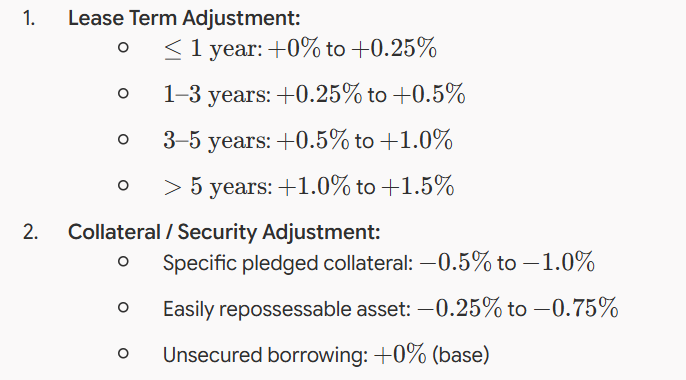
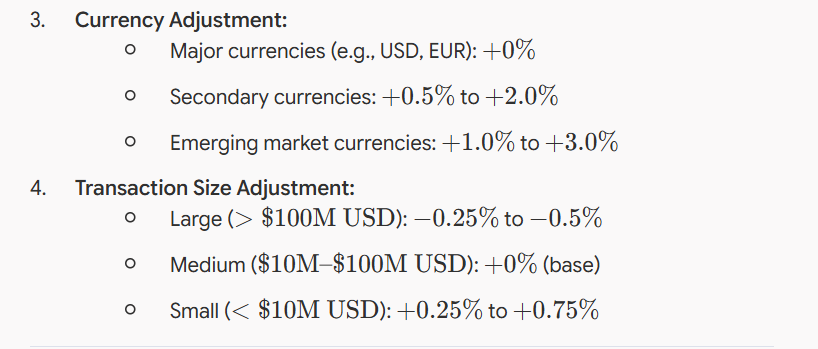
Practical Step-by-Step Calculation Example
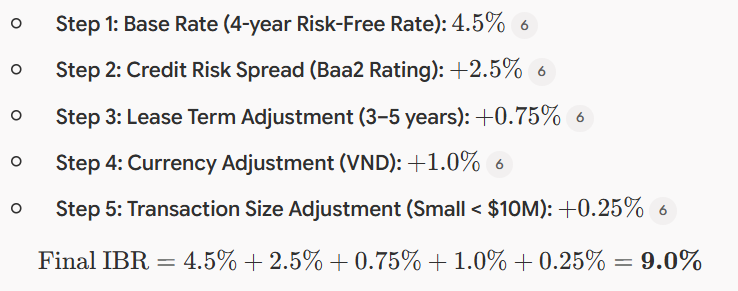
The reference guide illustrates a practical calculation for Company A (Credit Rating: Baa2) leasing passenger vehicles for a 4-year term in VND currency for a small transaction size:
4. Real-World Corporate Implementations: Global Case Studies
Financial disclosures of multinational corporations provide clear precedents on how IBR modeling is executed under audit scrutiny.
┌────────────────────────────────────────────────────────────────────────┐
│               GLOBAL IBR DISCLOSURE APPROACHES COMPARED                │
├──────────────────────┬──────────────────┬──────────────────────────────┤
│ Entity               │ Weighted Avg IBR │ Methodological Approach      │
├──────────────────────┼──────────────────┼──────────────────────────────┤
│ Deutsche Post DHL AG │ 3.80%            │ Multi-country bond curves    │
│ (Logistics - Germany)│ (at transition)  │ + leasing risk premium│
├──────────────────────┼──────────────────┼──────────────────────────────┤
│ IAG Group            │ 6.20%            │ Fleet/Real estate portfolio  │
│ (Airlines - UK/ES)   │ (at transition)  │ discount reconciliation│
├──────────────────────┼──────────────────┼──────────────────────────────┤
│ Play Communications  │ Granular swaps   │ Currency IRS curves + credit │
│ (Telecom - Poland)   │ by asset type    │ spread of peer rating│
└──────────────────────┴──────────────────┴──────────────────────────────┘
Case 1: Deutsche Post DHL AG – Yield Curves and Leasing Risk Premiums
In Note 5.2a of its financial statements, Deutsche Post DHL AG detailed the estimation mechanics for its opening lease liability valuation:
- Weighted Average Discount Rate: The group established an opening weighted average IBR of 3.8% across its global operations as of January 1, 2018.
- Reference Rate Determination: Reference interest rates were derived for terms extending up to 15 years from the yields of corporate bonds in major countries and currencies possessing deep capital markets. In jurisdictions lacking a deep corporate bond market, sovereign government bond yields were used instead.
- Asset Risk Adjustment: The base reference rates were adjusted by adding an asset-specific leasing risk premium.
- Financial Impact: Applying this IBR discounted gross undiscounted lease liabilities of €11,335 million down by €1,919 million, establishing opening capitalized lease liabilities of €9,410 million.
Case 2: Play Communications S.A. – Currency Swaps and Peer Rating Spreads
Play Communications S.A. (Note 2.5.2) established a clear methodology across thousands of lease agreements covering telecommunications sites, fiber optic networks, and retail points of sale:
- Methodology: The present value of lease payments was calculated using discount rates derived from the interest rate swap (IRS) rate applicable to the contract currency and tenor.
- Credit Adjustment: The IRS benchmark was adjusted by the average credit spread of entities with credit ratings comparable to the Group’s own credit rating, observed during the period in which the contract commenced or was modified.
Case 3: International Consolidated Airlines Group (IAG) – Large-Scale Transition
IAG applied an opening weighted average incremental borrowing rate of 6.2% upon adopting IFRS 16 on January 1, 2019.
- Discounting Impact: Disclosed IAS 17 operating lease commitments of €8,664 million were discounted using the 6.2% IBR to €5,612 million—a net present value reduction of €3,052 million attributable solely to the time value of money.
- Capitalization Outcome: Incorporating existing finance lease obligations and service contract adjustments brought total opening recognized IFRS 16 lease liabilities to €11,123 million.
5. Triggers for Reassessing and Updating the IBR
An IBR is not static. While day-one accounting fixes the discount rate for initial capitalization, IFRS 16 dictates specific operational triggers that require an updated IBR.
| Event Scenario | IBR Treatment | Accounting Impact | Standard Reference |
| Lease Modification adding scope (at standalone price) | New IBR applied to the additional component only. | Accounted for as a separate, distinct lease. | IFRS 16.44 |
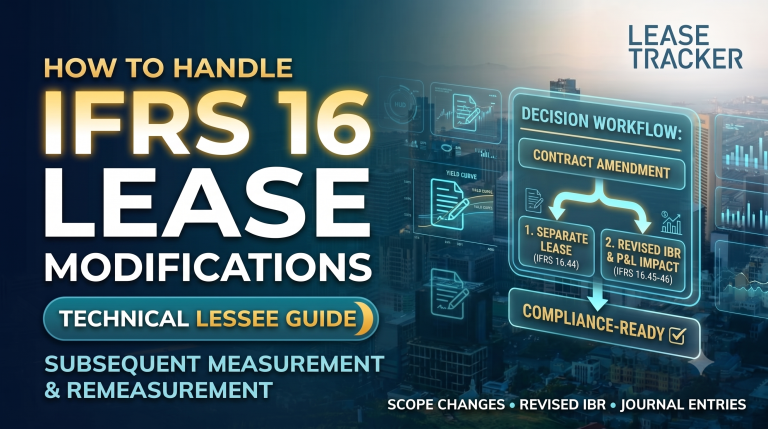
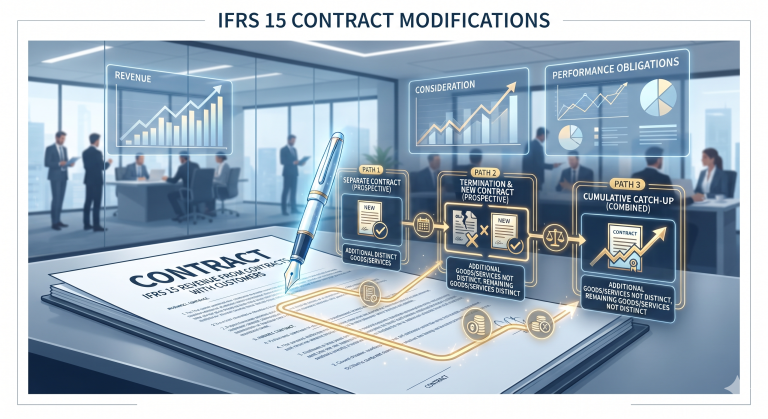
| Lease Modification not a separate lease (change in term, scope, or consideration) | Mandatory re-measurement using a current IBR at the effective modification date. | Re-measure lease liability; adjust ROU asset or recognize P&L gain/loss. | IFRS 16.45 |
| Change in Lease Term (alteration in extension/termination certainty) | Mandatory update using a revised IBR at the reassessment date. | Full re-measurement of liability with corresponding adjustment to ROU asset. | IFRS 16.40 |
| Change in payments via CPI / Index (with no change in lease term) | Maintain original IBR (Rate remains frozen). | Re-measure liability using unchanged discount rate; adjust ROU asset. | IFRS 16.42 |
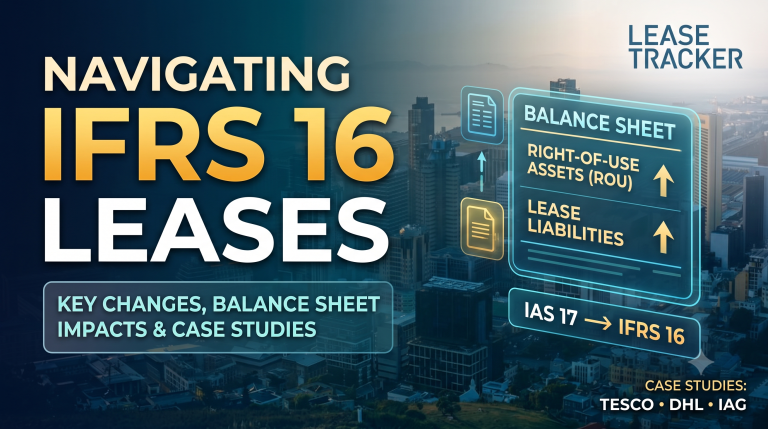
As demonstrated by Tesco Plc—where over 75% of leases featured inflation-linked rental uplifts—routine index reviews adjust the carrying value of the lease liability and ROU asset using the original historical discount rate, preserving stability in financing costs.
6. Practical Portfolio Expedient: Applying a Portfolio Discount Rate
For entities managing hundreds or thousands of high-volume, homogeneous lease contracts (such as retail chains, logistics fleets, or multinational workstation programs), determining a unique IBR for every single contract is operationally unfeasible.
Paragraph IFRS 16.B1 provides an explicit practical relief:
A lessee may apply a single discount rate to a portfolio of leases with similar characteristics, provided the entity reasonably expects that the application will not yield a materially different financial statement outcome than individual contract-level calculations.
Requirements for Portfolio Application
To survive audit review, leases grouped under a single portfolio IBR must share:
- Similar remaining lease terms (e.g., grouping 3- to 5-year vehicle leases into a 4-year proxy bucket)[cite: 3].
- Identical functional currency and economic jurisdiction.
- Similar collateral profiles (e.g., standard commercial light vehicles vs. heavy specialized manufacturing machinery).
7. Audit Compliance and Governance Best Practices
To establish institutional defensibility during external financial audits, corporate finance departments must formalize governance controls around IBR determination:
┌────────────────────────────────────────────────────────────────────────┐
│                   ANNUAL IBR AUDIT READINESS CHECKLIST                 │
├────────────────────────────────────────────────────────────────────────┤
│ [ ] Centralized Treasury Rate Sheets: Publish quarterly or annual      │
│     IBR yield matrices segmented by currency, tenor, and asset class.  │
│                                                                        │
│ [ ] Substantiated Benchmark Curves: Maintain point-in-time market data │
│     from reliable terminals (Bloomberg, Refinitiv) for base swap rates.│
│                                                                        │
│ [ ] Documented Credit Spread Derivation: Retain working papers for     │
│     credit rating updates or synthetic financial scorecard models.     │
│                                                                        │
│ [ ] Contract Modification Controls: Implement operational checkpoints │
│     ensuring lease amendments trigger an updated IBR review.           │
└────────────────────────────────────────────────────────────────────────┘
- Centralize IBR Governance within Corporate Treasury: Prevent decentralized country teams from determining subjective discount rates. Treasury should maintain a Centralized IBR Matrix updated at regular intervals (quarterly or semi-annually), mapping approved rates across standard maturity bands (e.g., 1–3 years, 3–5 years, 5–10 years, 10+ years) and asset classes.
- Archive Historical Point-in-Time Evidence: Because IBRs are established at contract inception or modification dates, retrospective recalculations are susceptible to hindsight bias[cite: 3]. Preserve third-party market data, banking quotes, and credit spreads prevailing on the actual execution dates[cite: 3].
- Conduct Sensitivity Analyses on Covenants: Model the impact of shifting IBR curves on balance sheet leverage. A lower IBR increases the capitalized lease liability, expanding total reported borrowings and tightening headroom under debt covenants that lack “frozen GAAP” protections.