IFRS 15 Step 4: Allocating the Transaction Price to Performance Obligations — Standalone Selling Prices, Contract Discounts, and Practical Modeling
1. Executive Summary & Core Objective of Step 4 (IFRS 15.73–75)
Once an entity has identified its distinct performance obligations in Step 2 and determined the overall transaction price in Step 3, it must resolve a critical financial reporting requirement: determining how much revenue to attribute to each distinct promise.
Under IFRS 15 Revenue from Contracts with Customers (paragraph 73), the objective when allocating the transaction price is:
For an entity to allocate the transaction price to each performance obligation (or distinct good or service) in an amount that depicts the amount of consideration to which the entity expects to be entitled in exchange for transferring the promised goods or services to the customer.
┌────────────────────────────────────────────────────────────────────────┐
│             CORE ALLOCATION PRINCIPLE (IFRS 15.74)                     │
├────────────────────────────────────────────────────────────────────────┤
│ To meet the allocation objective, an entity allocates the transaction  │
│ price to each performance obligation identified in the contract on a   │
│                                                                        │
│          RELATIVE STANDALONE SELLING PRICE (SSP) BASIS                 │
│                                                                        │
│                 determined at CONTRACT INCEPTION.                                      │
└────────────────────────────────────────────────────────────────────────┘
IFRS 15 prohibits arbitrary allocation methods—such as allocating revenue on a cash billing schedule, standard list-price percentage, or gross margin parity—unless specifically permitted by the standard.
2. Determining the Standalone Selling Price (SSP) (IFRS 15.76–80)
2.1. Observable Standalone Selling Price (IFRS 15.77)
The standalone selling price is the price at which an entity would sell a promised good or service separately to a customer.
- Best Evidence: An observable price of a good or service when the entity sells that good or service separately in similar circumstances and to similar customers.
- Contractually Stated vs. Observable Prices: A contractually stated price or a published list price may represent the standalone selling price, but it cannot be assumed to be representative if an entity routinely grants discretionary discounts, credits, or concessions.
2.2. Estimation Methods for Unobservable SSPs (IFRS 15.78–79)
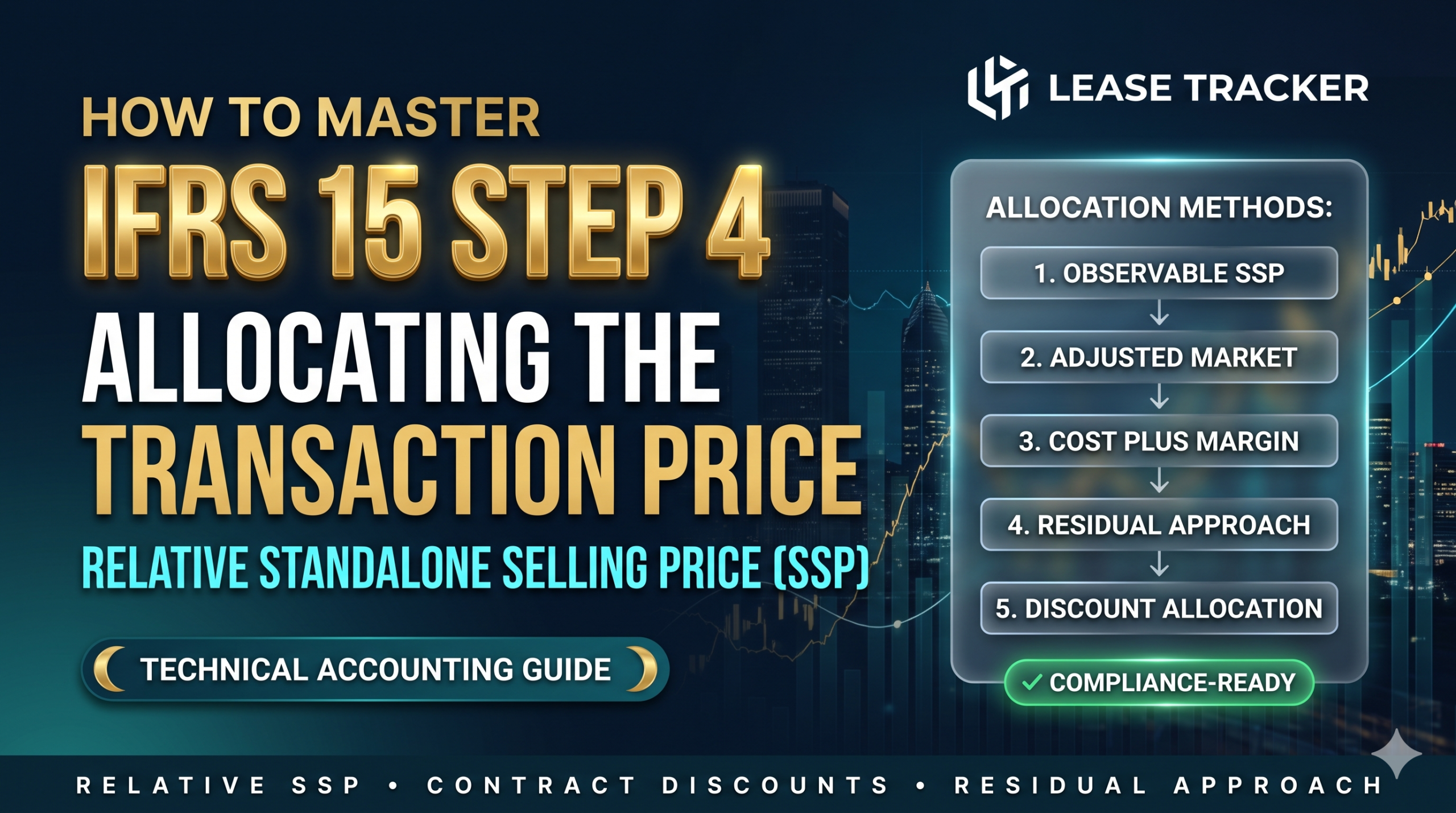
If a standalone selling price is not directly observable, the entity must estimate the SSP at an amount that maximizes the use of observable inputs. Paragraph 79 outlines three suitable estimation approaches:
┌────────────────────────────────────────────────────────────────────────┐
│             THREE METHODS TO ESTIMATE SSP (IFRS 15.79)                 │
├──────────────────────────┬─────────────────────────────────────────────┤
│ Method                   │ Operational Mechanics & Application         │
├──────────────────────────┼─────────────────────────────────────────────┤
│ 1. Adjusted Market       │ • Evaluates the market in which goods or    │
│    Assessment Approach   │   services are sold.                        │
│    (IFRS 15.79(a))       │ • Estimates the price customers in that     │
│                          │   market are willing to pay, referencing    │
│                          │   competitor prices adjusted for entity-    │
│                          │   specific costs and margins.               │
├──────────────────────────┼─────────────────────────────────────────────┤
│ 2. Expected Cost Plus    │ • Forecasts expected direct and indirect    │
│    a Margin Approach     │   costs of fulfilling the performance       │
│    (IFRS 15.79(b))       │   obligation.                               │
│                          │ • Adds an appropriate margin representing   │
│                          │   standard industry or internal returns     │
│                          │   for similar assets.                       │
├──────────────────────────┼─────────────────────────────────────────────┤
│ 3. Residual Approach     │ • Estimates SSP by subtracting the sum of   │
│    (IFRS 15.79(c))       │   observable SSPs of other goods/services   │
│                          │   promised from the total transaction price │
│                          │  .                                          │
│                          │ • STRICTLY RESTRICTED to cases of highly    │
│                          │   variable or uncertain selling prices      │
│                          │  .                                          │
└──────────────────────────┴─────────────────────────────────────────────┘
2.3. The Stringent Gating Criteria for the Residual Approach
Because the residual approach assigns all unallocated contract consideration to a single component, it carries significant risk of misallocating contract discounts. An entity may use the residual approach only if one of the following criteria in paragraph 79(c) is satisfied:
- Highly Variable Selling Price: The entity sells the same good or service to different customers (at or near the same time) for a broad range of amounts (meaning no representative standalone selling price is discernible). PDF
- Uncertain Selling Price: The entity has not yet established a price for that good or service, and it has not previously been sold on a standalone basis (e.g., brand-new, customized software modules). PDF
Audit Warning (Sanity Check): Under paragraph 80, if applying the residual approach results in a nominal, zero, or negative SSP (or an amount significantly below expected cost plus margin), the outcome is invalid. The entity must reassess the observable inputs of the other components or combine estimation methods.
3. Allocation of a Contract Discount (IFRS 15.81–83)
When a customer purchases a bundled package of goods or services, the total transaction price is frequently lower than the sum of the individual standalone selling prices. The difference represents a contract discount.
                 CONTRACT DISCOUNT ALLOCATION WORKFLOW
                 ═════════════════════════════════════
          Is there observable evidence that the entire discount
        belongs to ONLY ONE OR SOME performance obligations?
                                   │
                    ┌──────────────┴──────────────┐
                   YES                            NO
                    │                             │
                    ▼                             ▼
       ALLOCATE TO SPECIFIC OBLIGATION   ALLOCATE PROPORTIONATELY
     Allocate discount entirely to the   Allocate discount proportionately
     qualifying components if ALL 3      across ALL performance obligations
     criteria of IFRS 15.82 are met      based on relative Standalone
    .                                    Selling Prices.
Criteria for Allocating a Discount to Specific Obligations (IFRS 15.82):
An entity allocates a contract discount entirely to one or more (but not all) performance obligations only when all three of the following criteria are met:
- The entity regularly sells each distinct good or service (or bundle) in the contract on a standalone basis.
- The entity regularly sells, on a standalone basis, a bundle of some of those distinct goods or services at a discount to their individual standalone selling prices.
- The discount attributable to that bundle is substantially the same as the discount in the contract, and an analysis provides observable evidence of the performance obligations to which the discount belongs.
4. Allocation of Variable Consideration (IFRS 15.84–86)
Variable consideration (e.g., performance milestone bonuses, volume rebates, prompt payment discounts) may attach to the entire contract or to a specific part of the contract.
Under paragraph 85, an entity allocates a variable amount (and subsequent changes to that amount) entirely to a single performance obligation (or to a distinct good or service that forms part of a single series under paragraph 22(b)) only if both of the following criteria are met:
- Specific Performance Terms: The terms of a variable payment relate specifically to the entity’s efforts to satisfy that performance obligation (or to a specific outcome from satisfying it).
- Allocation Consistency: Allocating the variable amount entirely to the distinct performance obligation is consistent with the overall allocation objective in paragraph 73 when considering all performance obligations and payment terms in the contract.
If these criteria are not met, the variable consideration must be allocated across all performance obligations on a relative standalone selling price basis.
5. Subsequent Changes in the Transaction Price (IFRS 15.87–90)
After contract inception, the transaction price can change due to the resolution of variable consideration uncertainties, contract modifications, or performance adjustments.
┌────────────────────────────────────────────────────────────────────────┐
│             SUBSEQUENT TRANSACTION PRICE REALLOCATION RULES            │
├────────────────────────────────────────────────────────────────────────┤
│ 1. Allocation Basis: An entity allocates subsequent changes in the      │
│    transaction price to performance obligations on the SAME BASIS as   │
│    used at contract inception[cite: 12].                               │
│                                                                        │
│ 2. THE CARDINAL RULE (IFRS 15.88): An entity SHALL NOT reallocate the  │
│    transaction price to reflect subsequent changes in standalone       │
│    selling prices[cite: 12, 13]. Relative SSP percentages are fixed   │
│    permanently at inception[cite: 12, 13].                            │
│                                                                        │
│ 3. Satisfied Obligations (IFRS 15.88): Any amount allocated to a       │
│    satisfied performance obligation is recognized as revenue (or a     │
│    reduction in revenue) in the period of the price change on a        │
│    cumulative catch-up basis[cite: 12, 13].                           │
└────────────────────────────────────────────────────────────────────────┘
6. Comprehensive Numerical Case Studies & Journal Entries
Case Study 1: Multi-Element Telecommunications Bundle (Relative SSP Allocation)
- Transaction Terms: A telecommunications provider signs a 24-month contract with a customer.
- Deliverables:
- One high-end smartphone delivered immediately at contract inception.
- 24 months of unlimited voice and data network services.
- Pricing & Billing: The customer pays $0 upfront for the device and commits to $60 per month for 24 months (Total consideration: 60×24=$1,440).
- Observable Standalone Selling Prices:
- Smartphone standalone retail price: $600
- Network service standalone price: $45 per month (45×24=$1,080)
- Total aggregate standalone selling price: $600+$1,080=$1,680
┌────────────────────────────────────────────────────────────────────────┐
│                      STEP 4 ALLOCATION SCHEDULE                        │
├────────────────────┬──────────┬──────────────┬─────────────────────────┤
│ Performance        │ Standalone│ Relative SSP │ Allocated Transaction   │
│ Obligation         │ Price    │ Percentage   │ Price                   │
├────────────────────┼──────────┼──────────────┼─────────────────────────┤
│ Handset (Device)   │ $600     │ 35.7143%     │ $514.29                 │
│ Network (24 Months)│ $1,080   │ 64.2857%     │ $925.71 ($38.57/month)  │
├────────────────────┼──────────┼──────────────┼─────────────────────────┤
│ TOTAL              │ $1,680   │ 100.0000%    │ $1,440.00               │
└────────────────────┴──────────┴──────────────┴─────────────────────────┘
Accounting Entries:
1. At Contract Inception (Delivery of Device): Control of the handset transfers at a point in time. The entity recognizes revenue of $514.29 on day one, establishing a Contract Asset for the consideration earned ahead of billing:
Dr. Contract Asset                           $514.29
    Cr. Revenue (Handset Equipment Sales)                   $514.29
(To recognize revenue on handset transfer based on relative SSP allocation)
2. Monthly Accounting (Months 1 through 24): Upon issuing the monthly invoice of $60:
- Network Service Revenue recognized = $925.71/24=$38.57 per month.
- Contract Asset unwinding = $514.29/24=$21.43 per month.
Plaintext
Dr. Trade Receivables / Cash                  $60.00
    Cr. Revenue (Network Service Revenue)                    $38.57
    Cr. Contract Asset (Balance Sheet Recovery)              $21.43
(To record monthly billing, recognize service revenue, and clear contract asset)
Case Study 2: Enterprise Software Bundle with Specific Discount Allocation (IFRS 15.82)
- Transaction Scenario: TechCorp sells a bundled commercial contract to Enterprise Client E for a total fixed price of $160,000.
- Contract Components:
- License A: Enterprise ERP on-premise perpetual license.
- License B: Analytics CRM perpetual license.
- Service C: Two-year cloud hosting and technical support (PCS).
- Standalone Evidence:
- License A standalone selling price: $100,000 (Observable).
- License B standalone selling price: $60,000 (Observable).
- Service C standalone selling price: $40,000 (Observable).
- Sum of Standalone Selling Prices: $100,000+$60,000+$40,000=$200,000.
- Contract Discount: $200,000−$160,000=$40,000.
- Commercial Fact Pattern:
- TechCorp regularly sells License A and License B together as an “Integrated Suite” for $120,000 (a recurring discount of $40,000).
- Service C is sold separately for $40,000 with strictly no discounts.
Allocation Analysis (Applying Paragraph 82):
All three criteria of paragraph 82 are met:
- The $40,000 discount belongs entirely to License A and License B.
- Service C receives no discount and is allocated its full standalone price of $40,000.
- The combined discounted consideration of $120,000 is allocated between License A and License B based on their relative SSP:
JOURNAL ENTRY AT COMMENCEMENT DATE (LICENSES DELIVERED):
Dr. Trade Receivables / Cash                 $120,000
    Cr. Revenue (License A - ERP)                           $75,000
    Cr. Revenue (License B - CRM)                           $45,000
(To record delivery of perpetual software licenses with discount allocated per IFRS 15.82)
(Note: If paragraph 82 criteria had not been met, the $40,000 discount would have been spread proportionately across A, B, and C, artificially depressing Service C revenue to $32,000).
7. Critical Audit & Implementation Traps in Step 4
┌────────────────────────────────────────────────────────────────────────┐
│                   STEP 4 COMMON AUDIT PITFALLS                         │
├──────────────────────┬─────────────────────────────────────────────────┤
│ Audit Pitfall        │ Technical Violation & Correction Mechanism      │
├──────────────────────┼─────────────────────────────────────────────────┤
│ 1. Improper Use of   │ • Applying the residual approach simply because │
│    Residual Approach │   an asset is intangible.        │
│                      │ • Violation: Must demonstrate prices are highly │
│                      │   variable or unestablished[cite: 12].         │
├──────────────────────┼─────────────────────────────────────────────────┤
│ 2. Post-Inception    │ • Reallocating transaction price when market    │
│    SSP Reallocations │   prices or catalog rates fluctuate[cite: 12, 13].│
│                      │ • Violation of IFRS 15.88: SSP percentages are  │
│                      │   locked at contract inception[cite: 12, 13].  │
├──────────────────────┼─────────────────────────────────────────────────┤
│ 3. Ignoring Customer │ • Failing to allocate transaction price to      │
│    Material Rights   │   discount vouchers or loyalty points[cite: 11].│
│                      │ • Must treat material rights as distinct Step 2 │
│                      │   obligations and allocate SSP in Step 4.│
└──────────────────────┴─────────────────────────────────────────────────┘
- Unsubstantiated List Prices: Relying on published list prices as standalone selling prices when sales teams consistently offer unwritten discretionary discounts of 15%–20%. Regulators require observable transaction history, not nominal catalog rates.
- Gross Margin Equalization: Attempting to allocate revenue to ensure every contract element achieves identical gross profit margins. IFRS 15 bases allocation strictly on selling prices, not internal target profit margins.
- Misallocating Multi-Standard Contracts: In contracts containing lease components (IFRS 16) and service components (IFRS 15), failing to follow paragraph 7: lease components must be separated and measured first under IFRS 16 before allocating remaining consideration under IFRS 15.
8. Mandatory Financial Statement Disclosures (IFRS 15.120–128)
To comply with presentation and disclosure requirements, entities must provide quantitative and qualitative information regarding Step 4:
PDF+ 1
- [x] Methods and Inputs Used for SSP: Disclose the methods, inputs, and assumptions used to estimate standalone selling prices (e.g., adjusted market assessment, expected cost plus margin, or residual approach).
- [x] Specific Allocations: Disclose the qualitative justification for allocating contract discounts or variable consideration to specific performance obligations rather than across the whole contract.
- [x] Remaining Performance Obligations (Backlog): Disclose the aggregate amount of the transaction price allocated to performance obligations that are unsatisfied (or partially unsatisfied) as of the end of the reporting period, along with an explanation of when the entity expects to recognize that revenue (paragraph 120).
9. Frequently Asked Questions (FAQ)
Can an entity change its allocation of the transaction price if a contract is modified?
Yes, but only under the contract modification rules of IFRS 15.20–21. If a modification adds distinct goods/services not priced at standalone selling prices, it is accounted for prospectively as a termination of the old contract and creation of a new one, requiring a new allocation of remaining consideration to remaining performance obligations.
What is the difference between allocating a discount under IFRS 15 and recording a price concession?
A contract discount is determined at inception and allocated among identified performance obligations under Step 4. A price concession alters the total transaction price determined in Step 3 (variable consideration).
Does IFRS 15 permit allocating a zero standalone selling price to a contract component?
No. If a promised good or service is distinct, it has economic value to the customer. Allocating zero consideration to a distinct performance obligation violates the core allocation objective of paragraph 73.