IFRS 16 Subsequent Measurement & Lease Modifications: The Definitive Technical Guide for Lessees
1. Introduction: The Dynamic Nature of Day-Two Lease Accounting
Under IFRS 16 Leases, day-one initial recognition—capitalizing a Right-of-Use (ROU) asset and establishing a corresponding lease liability—is merely the starting point of the lease lifecycle. In commercial practice, leases are living contracts. Over multi-year terms, corporate tenants routinely expand leased office footprints, renegotiate rental rates, downsize warehouse space, or alter renewal and termination horizons in response to evolving macroeconomic and operational conditions.
Before IFRS 16 replaced IAS 17, operating lease amendments were treated as prospective adjustments to straight-line rent expense recorded off-balance sheet. Under IFRS 16’s single lessee accounting model, any variation during the lease term triggers rigorous balance sheet mechanics.
Lessees must differentiate between two distinct events:
- Remeasurements (Reassessments): Adjustments resulting from events or mechanisms already embedded within the original contract terms (e.g., market rent reviews, CPI uplifts, or revised exercise probabilities for existing options).
- Lease Modifications: Structural changes to the contract scope or consideration that were not part of the original terms and conditions (e.g., adding or relinquishing physical space, or renegotiating contract terms).
Misclassifying these events distorts capitalized borrowings, misstates operating profit and finance costs, and creates significant audit exposure.
2. Subsequent Measurement Mechanics for Lessees
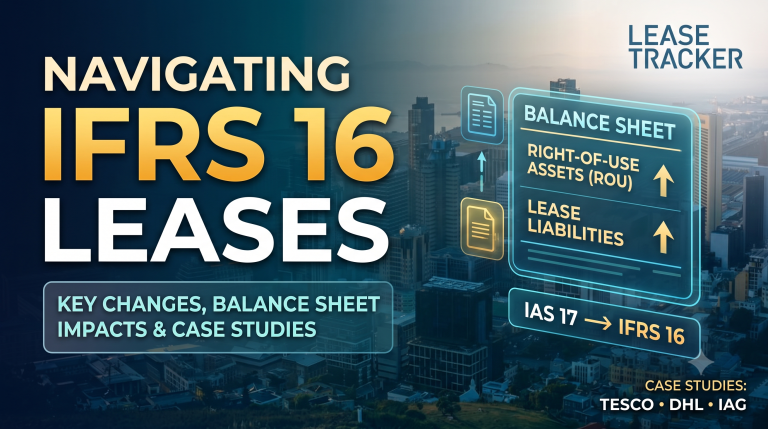
Following initial recognition, the ROU asset and the lease liability are accounted for using two distinct measurement models.
┌────────────────────────────────────────────────────────────────────────┐
│             IFRS 16 SUBSEQUENT MEASUREMENT DUAL FRAMEWORK              │
├──────────────────────────┬─────────────────────────────────────────────┤
│ Component                │ Primary Accounting Treatment                │
├──────────────────────────┼─────────────────────────────────────────────┤
│ Right-of-Use (ROU) Asset │ • Cost Model (IAS 16 PPE principles)│
│                          │ • Systematic straight-line depreciation│
│                          │ • Tested for impairment under IAS 36 │
├──────────────────────────┼─────────────────────────────────────────────┤
│ Lease Liability          │ • Effective interest method         │
│                          │ • Increased by periodic interest expense │
│                          │ • Reduced by cash lease payments made│
└──────────────────────────┴─────────────────────────────────────────────┘
2.1. Subsequent Measurement of the Lease Liability
Paragraph IN11 states that a lessee measures lease liabilities similarly to other financial liabilities amortized at amortized cost. During each reporting period, the carrying amount of the lease liability is:
- Increased by the accretion of interest expense, calculated using the effective interest method based on the discount rate determined at commencement (or the revised discount rate upon a modification).
- Decreased by cash payments made to the lessor during the period.
- Remeasured to reflect contract reassessments or lease modifications.
Under IAS 7, cash outflows must be split on the statement of cash flows into principal repayments (classified under financing activities) and interest expense (classified under financing or operating activities), driving an operational boost to operating cash flows ($CFO$).
2.2. Subsequent Measurement of the Right-of-Use Asset
Under paragraph IN11, the ROU asset is measured similarly to other non-financial assets under IAS 16 Property, Plant and Equipment. Under the standard cost model, the carrying amount equals initial cost, less accumulated depreciation and accumulated impairment losses, adjusted for any remeasurement of the lease liability.
- Depreciation Period: The ROU asset is depreciated on a systematic basis (typically straight-line) from the commencement date to the earlier of the end of the asset’s useful life or the end of the lease term. However, if the contract transfers ownership of the underlying asset to the lessee by the end of the lease term, or if the cost of the ROU asset reflects that the lessee will exercise a purchase option, depreciation must run over the underlying asset’s economic useful life.
- Impairment Testing: Lessees must apply IAS 36 Impairment of Assets to determine whether the ROU asset is impaired and account for any resulting impairment loss.
3. Reassessment of Lease Liabilities (Embedded Triggers)
A reassessment occurs when cash flows change due to events anticipated or provided for within the original contract structure. Unlike modifications, reassessments do not introduce newly negotiated clauses.
                     REASSESSMENT DECISION MATRIX
                     ════════════════════════════
             Did the reassessment involve options or CPI?
                                   │
                    ┌──────────────┴──────────────┐
     Option Assessment / RVGs                    CPI / Index Changes
                    │                                     │
                    ▼                                     ▼
        Remeasure liability using             Remeasure liability using
          REVISED Discount Rate                 ORIGINAL Discount Rate
        (IFRS 16.40, IBR updated)              (IFRS 16.42, rate frozen)
3.1. Reassessment Requiring a Revised Discount Rate (IFRS 16.40)
Lessees must remeasure the lease liability by discounting revised lease payments using a revised discount rate (an updated Incremental Borrowing Rate at the reassessment date) when there is:
- A change in the lease term resulting from a change in whether the lessee is reasonably certain to exercise an extension option or not exercise a termination option.
- A change in the assessment of whether the lessee is reasonably certain to exercise an option to purchase the underlying asset.
3.2. Reassessment Using an Unchanged (Original) Discount Rate (IFRS 16.42)
Lessees remeasure the lease liability using the original discount rate established at contract commencement when there is:
- A change in future lease payments resulting from a change in an index or rate used to determine those payments (such as inflation/CPI indexation or market rate reviews).
- A change in the amounts expected to be payable under a residual value guarantee (RVG).
Corporate Precedent (Tesco Plc): In its financial statement disclosures, Tesco Plc noted that over three-quarters of its lease portfolio on transition was subject to inflation-linked rental uplifts. Under IFRS 16.42, when these periodic inflation adjustments occur, Tesco remeasures its lease liabilities using the original discount rate, offsetting the adjustment directly against the carrying value of the corresponding ROU assets without impacting profit or loss on the adjustment date.
4. Defining a Lease Modification (IFRS 16 Appendix A)
A lease modification is defined in Appendix A as:
“A change in the scope of a lease, or the consideration for a lease, that was not part of the original terms and conditions of the lease (for example, adding or terminating the right to use one or more underlying assets, or extending or shortening the contractual lease term).”
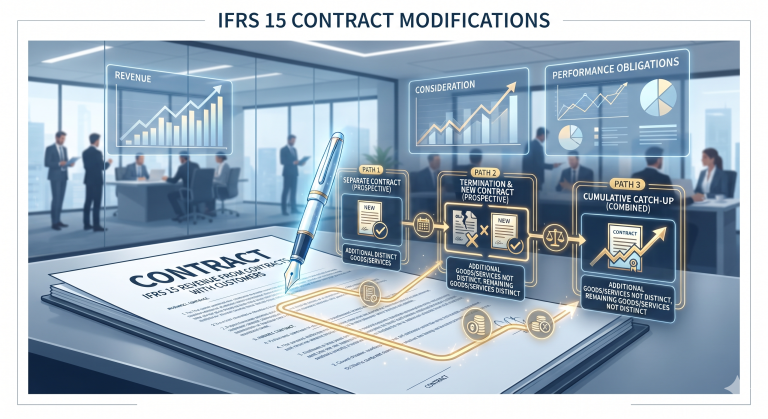
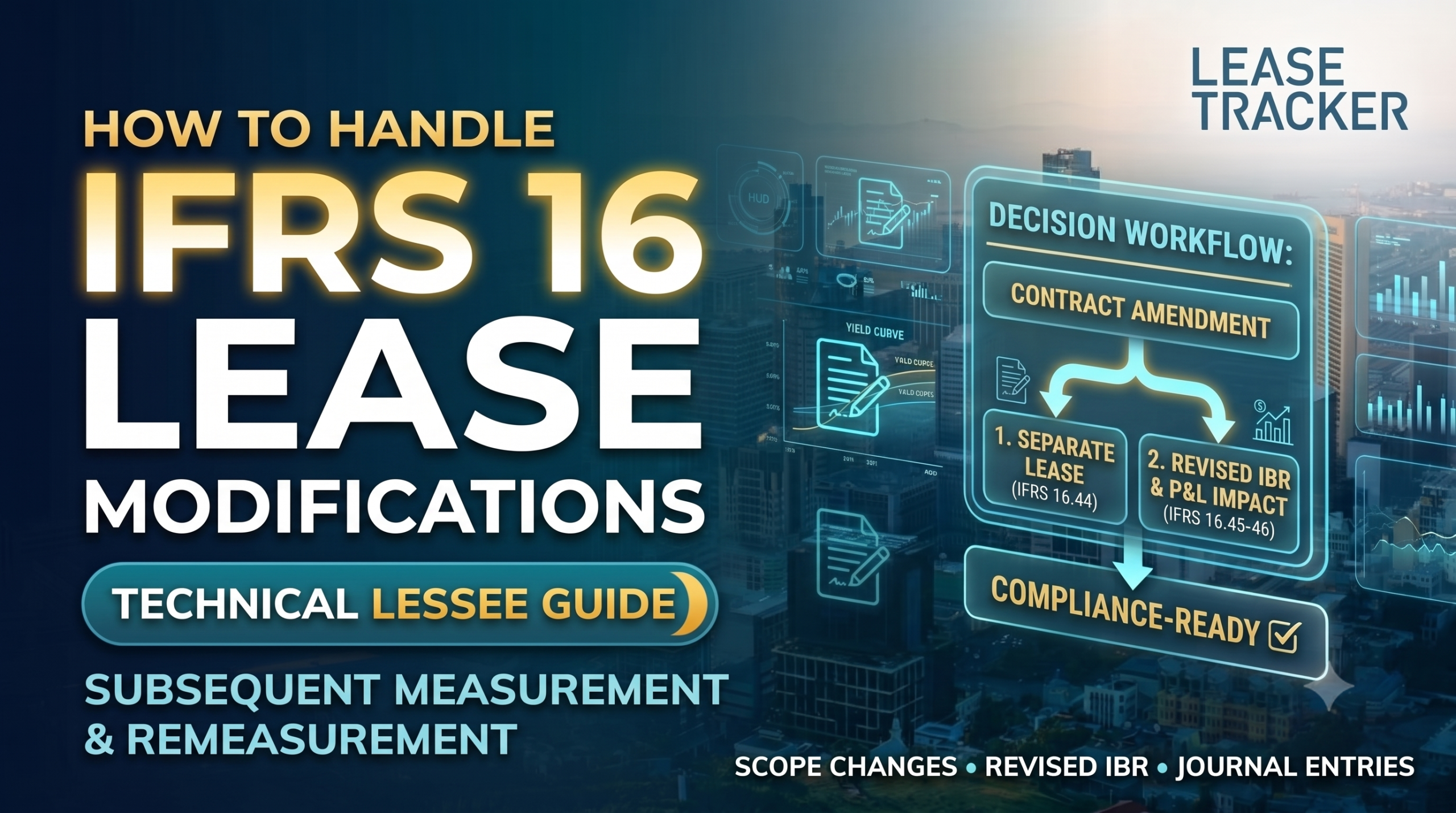
When an amendment meets this definition, lessees must follow the decision framework in paragraphs 44–46 to determine whether the modification constitutes a separate lease or a remeasurement of the existing lease.
┌────────────────────────────────────────────────────────────────────────┐
│             IFRS 16 LEASE MODIFICATION DECISION FRAMEWORK              │
└───────────────────────────────────┬────────────────────────────────────┘
                                    │
                    Does the modification increase scope
                  by adding the right to use one or more
                            underlying assets?
                                    │
                     ┌──────────────┴──────────────┐
                    YES                            NO
                     │                             │
        Does consideration increase                │
       commensurate with standalone                │
           price adjustments?                      │
                     │                             │
              ┌──────┴──────┐                      │
             YES            NO                     │
              │              │                     │
              ▼              └──────────┬──────────┘
      ACCOUNT AS A                      │
     SEPARATE LEASE                     ▼
     (IFRS 16.44)               DO NOT ACCOUNT AS
   • New ROU Asset              A SEPARATE LEASE
   • New Lease Liability        (IFRS 16.45-46)
   • Current IBR applied        • Allocate modified consideration
   • Existing lease untouched   • Determine modified lease term
                                • Remeasure using REVISED IBR
                                        │
                         ┌──────────────┴──────────────┐
                         ▼                             ▼
                 DECREASE IN SCOPE             ALL OTHER CHANGES
                  (IFRS 16.46(a))               (IFRS 16.46(b))
               • Proportionate ROU           • Liability adjusted
                 derecognition                 using revised IBR
               • P&L Gain/Loss               • Corresponding offset
                 recognized                    to ROU Asset
5. Accounting for Modifications as a Separate Lease (IFRS 16.44)
Under paragraph 44, a lease modification is accounted for as a separate lease (independent of the original agreement) if and only if both of the following cumulative criteria are met:
- Scope Condition: The modification increases the scope of the lease by adding the right to use one or more underlying assets.
- Price Condition: The consideration for the lease increases by an amount commensurate with the stand-alone price for the increase in scope, along with any appropriate adjustments to that stand-alone price to reflect the circumstances of the specific contract.
Accounting Impact:
- The original lease continues to be accounted for under its existing schedule without any adjustments to carrying values, amortization profiles, or discount rates.
- The new lease component is recognized at the effective date of modification as a distinct lease contract. A new ROU asset and lease liability are established using the lessee’s current Incremental Borrowing Rate (IBR) at that date.
6. Modifications NOT Accounted for as a Separate Lease (IFRS 16.45–46)
If a modification fails either condition of paragraph 44—such as extending duration, lowering rent, decreasing physical space, or expanding space at non-market rates—it cannot be treated as a separate lease.
Under paragraph 45, at the effective date of the modification, the lessee must:
- Allocate the modified consideration across contract components applying paragraphs 13–16.
- Determine the revised lease term applying paragraphs 18–19.
- Remeasure the lease liability by discounting the revised lease payments using a revised discount rate (the lessee’s current IBR at the modification’s effective date).
The accounting adjustments diverge into two pathways under paragraph 46:
Pathway A: Modifications that Decrease Lease Scope (IFRS 16.46(a))
When a modification decreases the scope of a lease (e.g., surrendering a floor in a commercial building or shortening the non-cancellable term), the transaction represents a partial or full derecognition of the lease.
- Step 1: The lessee reduces the carrying amount of both the lease liability and the ROU asset proportionally to reflect the terminated scope.
- Step 2: Any difference between the reduction in the lease liability and the proportionate reduction in the ROU asset is recognized immediately in Profit or Loss (P&L) as a termination gain or loss.
- Step 3: The remaining lease liability is adjusted to match the present value of remaining payments discounted at the revised IBR, with a corresponding balancing adjustment to the remaining ROU asset carrying value.
Pathway B: All Other Lease Modifications (IFRS 16.46(b))
For all other modifications—including term extensions, rate changes, or scope expansions below stand-alone prices—there is no derecognition.
- The lessee remeasures the lease liability to the present value of the revised lease payments using the revised IBR.
- The adjustment to the lease liability is offset entirely against the carrying amount of the ROU asset.
- No immediate P&L impact occurs unless the carrying amount of the ROU asset is reduced to zero, in which case any excess credit balance is recognized in profit or loss.
7. Numerical Case Studies & Journal Entries
Case Study 1: Scope Expansion at Stand-Alone Price (IFRS 16.44)
- Scenario: Company A leases 2,000m2 of office space for 10 years at market rates. At the beginning of Year 6, Company A and the lessor amend the contract to add an additional 1,000m2 of space in the same building for the remaining 5 years.
- Pricing: The rent for the additional 1,000m2 is set at market rate (stand-alone price) of $100,000 per annum payable annually in arrears. Company A’s current IBR at Year 6 is 5.0%.
- Analysis: The modification adds an underlying asset and is priced at stand-alone market value. It qualifies as a separate lease under paragraph 44.
- Initial Capitalization of New Lease:

JOURNAL ENTRY AT EFFECTIVE DATE OF MODIFICATION (YEAR 6):
Dr. Right-of-Use Asset (Additional Space)     $432,948
    Cr. Lease Liability (Additional Lease)                  $432,948
(To recognize the modification as an independent, separate lease contract)
The original lease on the 2,000m2 continues its existing amortization schedule unaffected.
Case Study 2: Scope Reduction with P&L Gain/Loss (IFRS 16.46(a))
- Scenario: Retailer B leases a flagship building consisting of 4 identical retail floors (4,000m2 total) with annual rent of $400,000 payable in arrears. At the end of Year 3, the carrying amounts are:
- Lease Liability: $1,500,000
- ROU Asset: $1,200,000
- The Modification: At the start of Year 4, Retailer B and the landlord amend the lease to surrender 2 floors (2,000m2, or 50% of the physical scope). Annual rent is reduced to $220,000 for the remaining 4 years.
- Discount Rate: Retailer B’s revised IBR at the modification date is 6.0%.
Step 1: Derecognition of 50% Scope
- Proportionate reduction of ROU Asset (50% of $1,200,000) = $600,000
- Proportionate reduction of Lease Liability (50% of $1,500,000) = $750,000
- Gain on partial termination recognized in P&L:

JOURNAL ENTRY — STEP 1 (SCOPE DERECOGNITION):
Dr. Lease Liability                           $750,000
    Cr. Right-of-Use Asset                                  $600,000
    Cr. Profit or Loss (Gain on Lease Termination)          $150,000
Step 2: Remeasurement of Remaining Liability
Following derecognition, the remaining pre-modification balances are:
- Remaining Lease Liability = $750,000
- Remaining ROU Asset = $600,000
The revised payments for the remaining 2 floors are $220,000 per year for 4 years, discounted at the revised IBR of 6.0%

Adjustment required to the remaining lease liability:

JOURNAL ENTRY — STEP 2 (REVISED LIABILITY ADJUSTMENT):
Dr. Right-of-Use Asset                         $12,322
    Cr. Lease Liability                                      $12,322
(To adjust remaining liability to revised present value via ROU asset)
- Ending Balances at Modification Date:
- Lease Liability = $762,322
- ROU Asset = $612,322 ($600,000 + $12,322)
- Net P&L Impact recognized immediately = $150,000 Gain [cite: 4]
Case Study 3: Lease Term Extension (IFRS 16.46(b))
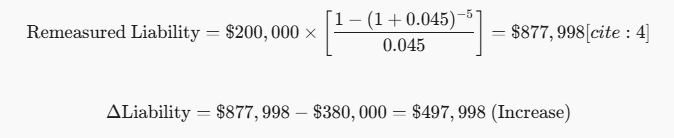
- Scenario: Logistics Group C has an existing warehouse lease with 2 years remaining. The carrying amount of the lease liability is $380,000 and the ROU asset is $350,000.
- The Modification: At the start of Year 3, Logistics Group C agrees to extend the lease term by an additional 3 years (total remaining term becomes 5 years). The annual rent of $200,000$ remains unchanged.
- Discount Rate: The lessee’s revised IBR at the modification date is 4.5%.
- Analysis: The modification changes consideration and extends duration without adding a distinct asset at stand-alone prices . It is a modification under paragraph 46(b).
- Calculation:
JOURNAL ENTRY AT MODIFICATION DATE:
Dr. Right-of-Use Asset                        $497,998
    Cr. Lease Liability                                     $497,998
(To record remeasured lease liability and adjust carrying amount of ROU asset)
No gain or loss is recognized in profit or loss. The revised ROU asset carrying value ($350,000 + $497,998 = $847,998) will be depreciated prospectively over the revised 5-year remaining term.
8. Financial Disclosures and Corporate Insights
Paragraphs 53 and 59 require structured disclosures surrounding remeasurements and modifications to ensure transparent reporting.
┌────────────────────────────────────────────────────────────────────────┐
│             DISCLOSURE CHECKLIST: MODIFICATIONS & SUBSEQUENT           │
├────────────────────────────────────────────────────────────────────────┤
│ [x] Additions to ROU Assets: Disclose additions resulting from         │
│     modifications and new contracts separately (IFRS 16.53(h)).│
│                                                                        │
│ [x] Gains or Losses on Modifications: Report net P&L impacts           │
│     arising from partial or full scope reductions (IFRS 16.53(i))[cite: 2].│
│                                                                        │
│ [x] Revised Discount Rate Assumptions: Detail key accounting           │
│     estimates and IBR benchmarking curves under IAS 1.125[cite: 2].    │
│                                                                        │
│ [x] Variable Lease Payments: Disclose variable payments not included   │
│     in lease liabilities in financial notes (IFRS 16.53(e))[cite: 2].   │
└────────────────────────────────────────────────────────────────────────┘
Corporate Case Insights:
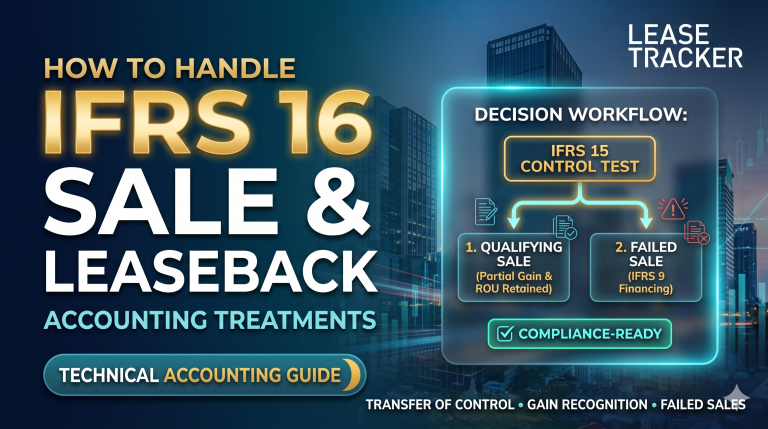
- Play Communications S.A.: Disclosed that when contract terms are reassessed or modified, the present value of lease payments is recalculated using swap rates matching the remaining tenor, adjusted for the group’s current credit spread at the modification date.
- Deutsche Post DHL AG: Disclosed practical expedients used to monitor extensive logistics facilities, detailing how variable lease payments and modifications were tracked across global operational subsidiaries.
9. Common Audit Pitfalls in Lease Modification Accounting
- Failure to Apply a Revised Discount Rate on Non-Separate Modifications: Finance teams often incorrectly apply the historical day-one discount rate when accounting for term extensions under paragraph 45. External auditors verify that a contemporaneous IBR is calibrated at the effective modification date.
- Offsetting Scope Reduction Gains into ROU Assets: Under paragraph 46(a), scope reductions mandate partial derecognition and immediate P&L gain/loss recognition. Netting the entire adjustment against the ROU asset violates the standard and misstates operating profit.
- Misidentifying Contract Amendments as Inception Events: Treating a modification as a brand new contract rather than an adjustment to an existing schedule can distort accumulated depreciation schedules and historical disclosure roll-forwards.
- Neglecting Currency and Collateral in Revised IBRs: When calculating revised IBRs for modified leases, teams must re-evaluate the collateral value of the modified ROU asset and local currency interest rate environments rather than reusing generic corporate WACCs.
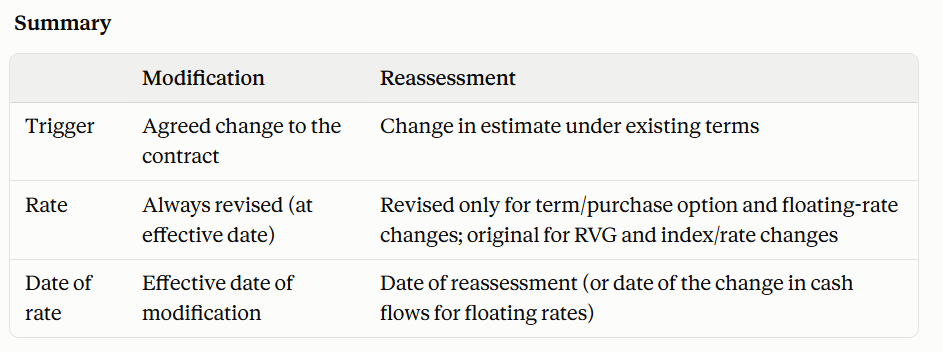
Notes: Compare IBR in a Lease modification vs. IBR in a Lease reassessment:
Lease modification (IFRS 16.45)
A modification is a change in the scope or consideration of the lease that was not part of the original terms (e.g., adding or removing space, shortening the term by agreement, changing the rent by renegotiation)
Lease reassessment (IFRS 16.39-43)
A reassessment is a change in the estimate of something already provided for in the original contract, with no renegotiation. The terms are the same; only the expectations changed.