IFRS 16 Sale and Leaseback Transactions: Technical Accounting, IFRS 15 Gateway, and Practical Modeling
1. Executive Summary: The Paradigm Shift Under IFRS 16
Sale and leaseback transactions have long served corporate treasuries as an effective mechanism to unlock liquidity from illiquid capital assets (such as corporate headquarters, distribution hubs, retail store networks, and aircraft fleets) while retaining operational continuity.
Under the legacy framework of IAS 17, the accounting for a sale and leaseback depended almost entirely on whether the subsequent lease was classified as a finance lease or an operating lease:
- If classified as an operating lease, the transaction was treated as a complete disposal: the asset was derecognized, and the full gain or loss was recognized immediately in profit or loss if executed at fair value.
- If classified as a finance lease, the gain was deferred and amortized over the lease term.
┌────────────────────────────────────────────────────────────────────────┐
│                   THE SALE AND LEASEBACK EVOLUTION                     │
├──────────────────────────┬─────────────────────────────────────────────┤
│ IAS 17 (Legacy Model)    │ IFRS 16 (Current Standard)                  │
├──────────────────────────┼─────────────────────────────────────────────┤
│ Full gain recognized if  │ Gain recognition strictly restricted to the │
│ leaseback was operating  │ rights transferred to buyer-lessor│
├──────────────────────────┼─────────────────────────────────────────────┤
│ Lease classification     │ Governed by IFRS 15 Revenue from Contracts  │
│ determined accounting    │ with Customers (Transfer of Control)        │
├──────────────────────────┼─────────────────────────────────────────────┤
│ Off-balance sheet if     │ Seller-lessee capitalizes a Right-of-Use    │
│ lease was operating      │ Asset and recognizes a Lease Liability      │
└──────────────────────────┴─────────────────────────────────────────────┘
IFRS 16 Leases (paragraphs 98–103) fundamentally overhauls this treatment by introducing a two-stage evaluation model:
- The IFRS 15 Gateway: An entity must first determine whether the transfer of the asset satisfies the performance obligation requirements of IFRS 15 Revenue from Contracts with Customers to be accounted for as a genuine sale.
- Proportionate Gain/Loss Recognition: Even if the transfer qualifies as a sale, the seller-lessee is prohibited from recognizing the full gain on disposal. Instead, the seller-lessee measures the Right-of-Use (ROU) asset arising from the leaseback at the proportion of the previous carrying amount that relates to the rights retained, recognizing a gain or loss only on the rights transferred.
2. Step 1: The IFRS 15 Gateway — Determining Whether a Sale Has Occurred
Paragraph 99 mandates that an entity shall apply the requirements for determining when a performance obligation is satisfied in IFRS 15 to assess whether the transfer of an asset is accounted for as a sale of that asset.
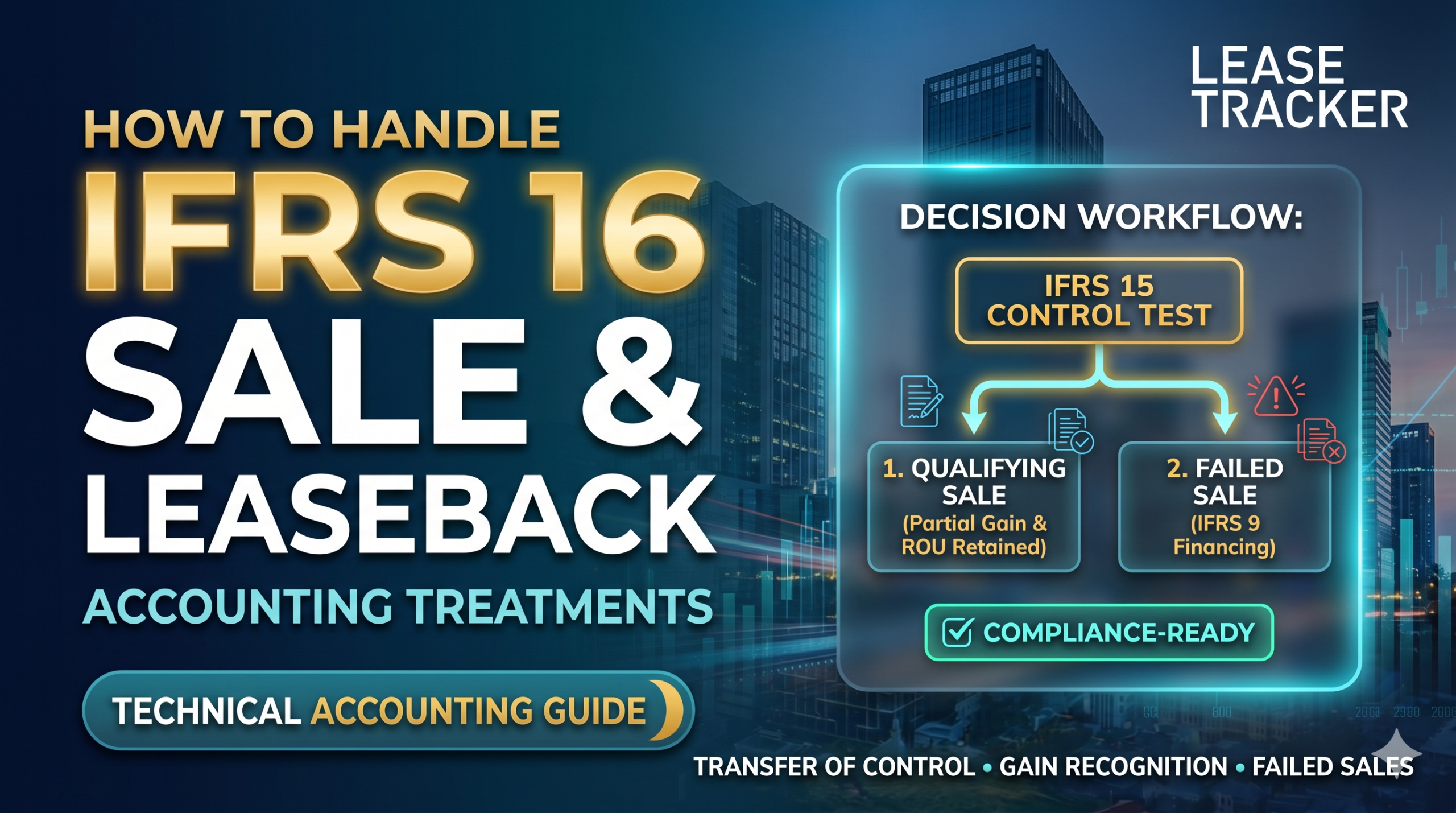
                 IFRS 15 TRANSFER OF CONTROL DECISION TREE
                 ═════════════════════════════════════════
          Does the transfer of the asset qualify as a sale under IFRS 15?
                                   │
                    ┌──────────────┴──────────────┐
                   YES                            NO
                    │                             │
                    ▼                             ▼
         QUALIFYING SALE (IFRS 16.100)     FAILED SALE (IFRS 16.103)
         • Derecognize underlying asset    • Keep asset on balance sheet
         • Recognize partial ROU Asset     • Treat cash received as a
         • Recognize partial P&L gain/loss   financial liability (IFRS 9)
2.1. Evaluating Transfer of Control
Under IFRS 15, control of an asset refers to the ability to direct the use of, and obtain substantially all of the remaining benefits from, the asset. Indicators of control transfer include:
- The buyer-lessor has physical possession of the asset.
- The buyer-lessor has the significant risks and rewards of ownership.
- The buyer-lessor has legal title and accepted the asset.
- The seller-lessee has a present right to payment.
2.2. The Repurchase Option Trap
A critical pitfall in real estate and infrastructure leasebacks is the inclusion of a repurchase option (call option):
- If the seller-lessee has a substantive right to repurchase the asset, the buyer-lessor does not obtain control of the asset because its ability to direct the use and obtain benefits is restricted.
- Consequently, any sale and leaseback agreement featuring a call option for the seller fails the IFRS 15 sale test at inception, regardless of the probability of exercise.
3. Accounting for a Failed Sale: Financing Transaction (IFRS 16.103)
If the transfer of the asset does not satisfy the requirements of IFRS 15 to be accounted for as a sale, the transaction is treated purely as a collateralized financing arrangement under IFRS 9 Financial Instruments:
┌────────────────────────────────────────────────────────────────────────┐
│                   FAILED SALE ACCOUNTING (IFRS 16.103)                 │
├──────────────────────────┬─────────────────────────────────────────────┤
│ SELLER-LESSEE            │ BUYER-LESSOR                                │
├──────────────────────────┼─────────────────────────────────────────────┤
│ • Retains underlying     │ • Does NOT recognize the transferred asset  │
│   asset on balance sheet │ • Recognizes a Financial Asset under IFRS 9 │
│ • Continues depreciation │   equal to the cash paid out                │
│ • Recognizes a Financial │ • Accounts for cash received as debt        │
│   Liability under IFRS 9 │   service (principal reduction + interest   │
│   equal to transfer cash │   income)                                   │
└──────────────────────────┴─────────────────────────────────────────────┘
Seller-Lessee Journal Entries (Failed Sale):
Plaintext
At Transaction Date:
Dr. Cash                                  [Transfer proceeds received]
    Cr. Financial Liability (IFRS 9)                  [Cash received]
(To record cash received as a secured borrowing; no gain/loss recognized)

Subsequent Accounting:
Dr. Finance Expense (P&L - Effective Interest)
Dr. Financial Liability (IFRS 9 - Principal)
    Cr. Cash                                          [Periodic payments]
(To record debt service payments over the lease term)

Dr. Depreciation Expense (P&L - IAS 16)
    Cr. Accumulated Depreciation                      [Normal depreciation]
(Underlying asset remains capitalized and depreciated under IAS 16)
4. Accounting for a Qualifying Sale (IFRS 16.100)
When the transfer satisfies IFRS 15, the asset has been sold. However, because the seller immediately reacquires the right to use that asset via a leaseback, the transaction is economically a disposal of only a portion of the asset.
Under paragraph 100(a), the seller-lessee must:
- Derecognize the entire carrying amount of the underlying physical asset.
- Measure the ROU Asset arising from the leaseback at the proportion of the previous carrying amount of the asset that relates to the right of use retained.
- Recognize a Lease Liability equal to the present value of the lease payments.
- Recognize in Profit or Loss only the amount of any gain or loss that relates to the rights transferred to the buyer-lessor.
                 PROPORTIONATE MEASUREMENT FORMULAS
                 ═════════════════════════════════

                                  PV of Lease Payments
  Proportion of Rights Retained = ────────────────────
                                   Fair Value of Asset

  ROU Asset Carrying Amount     = Carrying Amount × Proportion of Rights Retained

  Proportion of Rights Sold     = 1 - Proportion of Rights Retained

  Recognized Gain / (Loss)      = Total Gain / (Loss) × Proportion of Rights Sold
Where:
Total Gain = Fair Value of Asset – Carrying Amount of Asset
5. Off-Market Terms: Adjustments for Above- or Below-Market Elements (IFRS 16.101)
In commercial transactions, sale prices and lease rentals are frequently negotiated as an interdependent package. A seller-lessee might accept a below-market sale price in exchange for below-market leaseback rentals, or vice versa.
Paragraph 101 mandates that if the sales consideration does not equal the asset’s fair value, or if lease payments are not at market rates, an entity must make the following adjustments to measure the sale proceeds at fair value:
┌────────────────────────────────────────────────────────────────────────┐
│                   OFF-MARKET ADJUSTMENT MECHANISMS                     │
├──────────────────────────┬─────────────────────────────────────────────┤
│ Condition                │ Accounting Treatment                        │
├──────────────────────────┼─────────────────────────────────────────────┤
│ Below-Market Terms       │ Accounted for as a PREPAYMENT of lease      │
│ (Sale Price < Fair Value │ payments (increases the initial ROU asset   │
│ or Below-Market Rents)   │ measurement)                      │
├──────────────────────────┼─────────────────────────────────────────────┤
│ Above-Market Terms       │ Accounted for as ADDITIONAL FINANCING       │
│ (Sale Price > Fair Value │ provided by the buyer-lessor to the         │
│ or Above-Market Rents)   │ seller-lessee (treated as an IFRS 9 debt)   │
│                          │                                   │
└──────────────────────────┴─────────────────────────────────────────────┘
The adjustment is quantified based on the more readily determinable of:
- The difference between the fair value of the sale consideration and the fair value of the asset.
- The difference between the present value of contractual lease payments and the present value of lease payments at market rates.
6. Comprehensive Numerical Case Study
To see how these principles function in practice, consider the following technical scenario.
Transaction Parameters:
- Underlying Asset: Commercial Logistics Center.
- Carrying Amount at Sale Date: $6,000,000
- Fair Value of Logistics Center: $10,000,000
- Sale Price (Agreed Consideration): $10,000,000 (At Fair Value)
- Leaseback Term: 10 years, annual payments of $800,000 payable in arrears.
- Market Rental Rate: $800,000 per annum (At Market Terms)
- Seller-Lessee’s Incremental Borrowing Rate (IBR): 6.0% per annum.
- Control Assessment: Criteria of IFRS 15 are met; transfer is a sale.
Step-by-Step Calculations:
1. Measure the Lease Liability
PV of Lease Payments :

2. Determine Proportion of Rights Retained and Transferred
Proportion of Rights Retained:


3. Calculate Initial Carrying Amount of ROU Asset
ROU Asset = Carrying Amount x Proportion Retained = $6,000,000 x 58.8807% = $3,532,842
4. Calculate Recognized Gain on Sale
Total Economic Gain = Fair Value – Carrying Amount = $10,000,000 – $6,000,000 = $4,000,000
Recognized Gain in P&L = Total Gain x Proportion Transferred = $4,000,000 x 41.1193% = $1,644,772
(Note: The unrecognized portion of the gain—$4,000,000 x 58.8807% = $2,355,228—is effectively netted against the ROU asset: $5,888,070 (Gross Liability)} – $2,355,228 = $3,532,842).
Journal Entries for Seller-Lessee:
AT COMMENCEMENT DATE OF SALE AND LEASEBACK:

Dr. Cash                                     $10,000,000
Dr. Right-of-Use Asset                        $3,532,842
    Cr. Property, Plant & Equipment (Cost/NBV)             $6,000,000
    Cr. Lease Liability                                    $5,888,070
    Cr. Profit or Loss (Gain on Sale and Leaseback)        $1,644,772

(To record disposal of property, recognition of ROU asset retained,
 capital lease liability, and net gain on rights transferred to buyer)
Journal Entries for Buyer-Lessor:
The buyer-lessor purchases the physical asset and leases it back under standard lessor rules (IFRS 16.61–88):
AT COMMENCEMENT DATE (ASSUMING OPERATING LEASE CLASSIFICATION):

Dr. Investment Property / PP&E (Fair Value)  $10,000,000
    Cr. Cash                                              $10,000,000
(To record purchase of physical asset at fair value)

Subsequent Periods:
Dr. Cash                                        $800,000
    Cr. Rental Income (P&L - Straight-line)                  $800,000
(To record operating lease rental receipt)

Dr. Depreciation Expense (P&L - IAS 16/IAS 40)
    Cr. Accumulated Depreciation
(To depreciate the purchased asset over its remaining useful life)
7. Numerical Case 2: Above-Market Sale Price (Financing Component)
Consider the same property where the parties agree to a sale price of $11,000,000$ (which is $1,000,000$ above fair value) and annual lease payments of $950,000.
Identification of Off-Market Elements:
- Excess Sale Price: $11,000,000 – $10,000,000 = $1,000,000 (Above-market financing).
- Total Present Value of Lease Payments (at 6%): PV = $950,000 x 7.360087 = $6,992,083
- Split of Lease Payments:
- Financial Liability (IFRS 9 Loan): $1,000,000
- True Lease Liability (IFRS 16): $6,992,083 – $1,000,000 = $5,992,083
JOURNAL ENTRY FOR SELLER-LESSEE (ABOVE-MARKET LEASEBACK):

Dr. Cash                                     $11,000,000
Dr. Right-of-Use Asset                        $3,595,250
    Cr. Property, Plant & Equipment                        $6,000,000
    Cr. Lease Liability (IFRS 16)                          $5,992,083
    Cr. Financial Liability (IFRS 9 Borrowing)             $1,000,000
    Cr. Profit or Loss (Gain on Rights Transferred)        $1,603,167
(To record sale at above-market terms, bifurcating additional IFRS 9 financing)
8. Real-World Corporate Reporting: Case Study Insights
Corporate annual reports illustrate how sale and leaseback transactions are presented in practice.
┌────────────────────────────────────────────────────────────────────────┐
│             CORPORATE SALE AND LEASEBACK DISCLOSURE EXAMPLES           │
├──────────────────────┬─────────────────────────────────────────────────┤
│ Company              │ Reporting Approach & Impact                     │
├──────────────────────┼─────────────────────────────────────────────────┤
│ Tesco Plc            │ • Included sale and leaseback accounting in its │
│ (Retail - UK)        │   significant accounting policies (Note 4.3b)   │
│                      │  .                                    │
│                      │ • Reported profit/loss on sale of PPE and early │
│                      │   termination of leases in cash flow statement  │
│                      │   restatements.                       │
├──────────────────────┼─────────────────────────────────────────────────┤
│ Deutsche Post DHL AG │ • Explicitly disaggregated lease income in      │
│ (Logistics - Germany)│   Note 5.2a, disclosing €46 million in income   │
│                      │   from sale and leaseback transactions│
└──────────────────────┴─────────────────────────────────────────────────┘
- Tesco Plc: In its H1 interim financial statements (Note 5.3b), Tesco disclosed that in restating its comparative financial statements for IFRS 16, proceeds from the sale of property, plant, and equipment, investment property, and intangible assets totaled £134 million. It highlighted that under IFRS 16, profit recognition is restricted solely to the proportion of the asset transferred to the buyer-lessor, preventing upfront gain inflation.
- Deutsche Post DHL AG: In Note 5.2a, DHL presented its lease-related earnings, disclosing €46 million of income derived specifically from sale and leaseback transactions, distinguishing it from recurring third-party sublease income.
9. Financial Statement Disclosure Checklist (IFRS 16.53 & IFRS 16.B52)
Lessees and lessors involved in sale and leaseback transactions must meet specific disclosure mandates to ensure transparent financial reporting:
- [x] P&L Gains or Losses: Disclose the gain or loss arising from sale and leaseback transactions separately in the notes to the financial statements (IFRS 16.53(i)).
- [x] Cash Flow Disclosures: Segregate proceeds received from the sale of the asset (investing cash inflow) from the periodic leaseback payments (split between financing principal repayments and financing/operating interest).
- [x] Qualitative Commercial Terms: Disclose the terms and conditions of significant sale and leaseback transactions, including key leaseback terms, termination rights, renewal periods, and residual value guarantees (IFRS 16.B52).
- [x] Off-Market Adjustments: State the nature and amounts of adjustments made for above-market or below-market terms (IFRS 16.101).
10. Frequently Asked Questions (FAQ)
Can a seller-lessee recognize 100% of the gain on a sale and leaseback transaction under IFRS 16?
No. Under IFRS 16.100(a), a seller-lessee can only recognize the amount of gain or loss that relates to the rights transferred to the buyer-lessor. The proportion of the gain that relates to the right-of-use retained through the leaseback is deferred as a reduction of the Right-of-Use asset.
What happens if the seller-lessee has an option to repurchase the asset?
If the seller-lessee retains a substantive call option to repurchase the underlying asset, control has not passed under IFRS 15. The transaction fails the sale criteria and must be accounted for as a financing transaction under IFRS 9: the asset remains on the seller’s balance sheet, and proceeds received are recorded as a financial liability[cite: 3].
How does a sale and leaseback affect EBITDA under IFRS 16?
Under legacy IAS 17, operating leasebacks reduced EBITDA because the flat lease payments were recorded inside operating costs. Under IFRS 16, because the leaseback creates an ROU asset (depreciated) and a lease liability (generating interest expense), the leaseback costs are presented below EBITDA, boosting reported EBITDA while increasing interest-bearing borrowings.