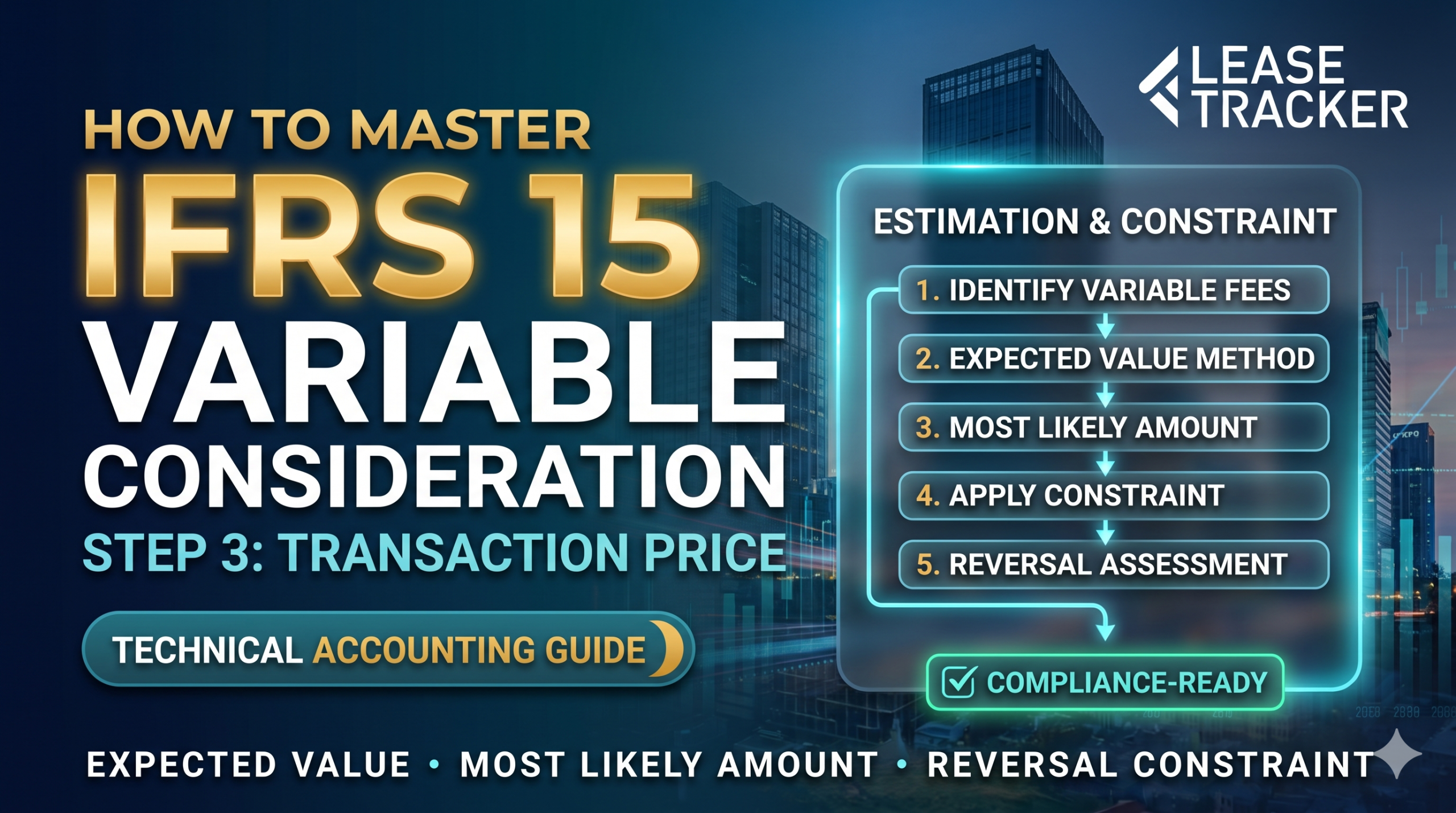
IFRS 15 Variable Consideration: Determining the Transaction Price, Applying the Constraint, and Practical Modeling
1. Executive Summary: The Volatility in Step 3
Under IFRS 15 Revenue from Contracts with Customers, determining the transaction price (Step 3 of the Five-Step Model) is rarely as straightforward as reading the stated contract price. Commercial agreements frequently incorporate pricing variability: volume discounts, annual rebates, performance bonuses, liquidated damages, prompt-settlement discounts, rights of return, and price concessions.
Under legacy standards (IAS 18 Revenue and IAS 11 Construction Contracts), variable or contingent consideration was often recognized based on high-level “probability” assessments or deferred until all contingencies legally lapsed. This created widespread inconsistency across industries, with some entities accelerating revenue prematurely while others deferred revenue unnecessarily.
┌────────────────────────────────────────────────────────────────────────┐
│               VARIABLE CONSIDERATION: LEGACY VS. IFRS 15               │
├──────────────────────────┬─────────────────────────────────────────────┤
│ Dimension                │ IFRS 15 Framework (Current Standard)        │
├──────────────────────────┼─────────────────────────────────────────────┤
│ Core Requirement         │ Must estimate variable amounts at inception │
│                          │ and include them in the transaction price   │
│                          │.                             │
├──────────────────────────┼─────────────────────────────────────────────┤
│ Estimation Model         │ Strictly limited to two statistical models: │
│                          │ 1. Expected Value (probability-weighted)    │
│                          │ 2. Most Likely Amount (single outcome)      │
│                          │.                             │
├──────────────────────────┼─────────────────────────────────────────────┤
│ Revenue Gatekeeper       │ The Variable Consideration Constraint:      │
│                          │ Revenue is recognized only if it is "highly │
│                          │ probable" that a significant reversal will  │
│                          │ NOT occur.               │
├──────────────────────────┼─────────────────────────────────────────────┤
│ Reporting Updates        │ Mandatory end-of-period reassessment of the │
│                          │ estimated price and constraint thresholds   │
│                          │.                             │
└──────────────────────────┴─────────────────────────────────────────────┘
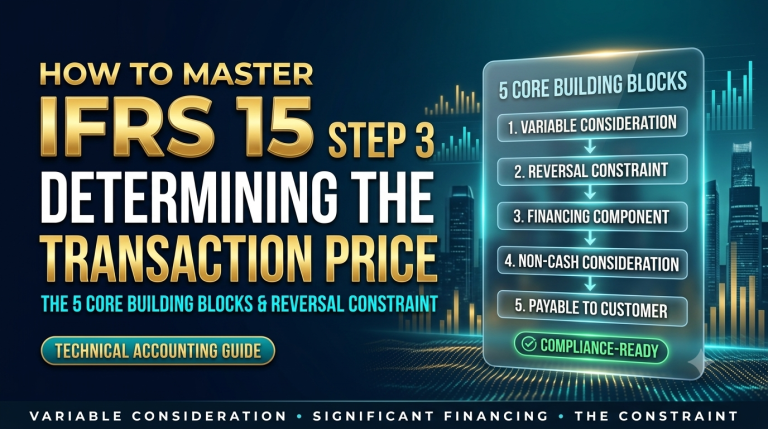
IFRS 15 establishes a disciplined, predictive framework: entities must estimate variable consideration from day one, subject to a stringent qualitative and quantitative gatekeeper known as the Variable Consideration Constraint (paragraphs 56–58).
2. Defining Variable Consideration (IFRS 15.50–52)
According to paragraph 50, an amount of consideration can vary because of discounts, rebates, refunds, credits, price concessions, incentives, performance bonuses, penalties, or other similar items. Promised consideration can also vary if an entity’s entitlement to the consideration is contingent on the occurrence or non-occurrence of a future event (for example, whether a product is returned or a project milestone is met).
                       ANATOMY OF VARIABLE PRICING
                       ═══════════════════════════
         ┌──────────────────────────┴──────────────────────────┐
         ▼                                                     ▼
   EXPLICIT VARIABILITY                                IMPLICIT VARIABILITY
• Stated contractual terms:                         • Customary business practices:
  - Volume tiered discounts                           - Historical price concessions
  - Milestone performance bonuses          - Unwritten settlement rebates
  - Liquidated damages / penalties         - Discretionary credits
• Contractual right of return            • Customer expectations driven by
• Index-linked price escalations                      published commercial policies
Explicit vs. Implicit Price Variability
A critical requirement under paragraph 52 is that variability does not need to be explicitly documented in legal text. Consideration is variable if:
- Valid Customer Expectations: The customer has a valid expectation arising from an entity’s published policies, customary business practices, or specific oral statements that the entity will accept an amount lower than the contract price (i.e., offer an implicit price concession).
- Surrounding Facts and Circumstances: Facts indicate that the entity entered into the contract with the initial intention of offering a price discount or credit concession.
3. Estimation Methodologies: Expected Value vs. Most Likely Amount (IFRS 15.53)
An entity must estimate an amount of variable consideration using one of two methods, depending on which approach better predicts the consideration to which the entity expects to be entitled:
┌────────────────────────────────────────────────────────────────────────┐
│                   IFRS 15.53 ESTIMATION METHODOLOGIES                  │
├──────────────────────────┬─────────────────────────────────────────────┤
│ Method                   │ Operational Criteria & Best Application     │
├──────────────────────────┼─────────────────────────────────────────────┤
│ 1. Expected Value        │ • Sum of probability-weighted amounts in a  │
│                          │   range of possible consideration outcomes. │
│                          │ • Appropriate when an entity has a LARGE    │
│                          │   NUMBER of contracts with similar          │
│                          │   characteristics (e.g., retail returns,    │
│                          │   mass-market tiered volume rebates).│
├──────────────────────────┼─────────────────────────────────────────────┤
│ 2. Most Likely Amount    │ • The single most likely outcome in a range │
│                          │   of possible consideration outcomes.       │
│                          │ • Appropriate when the contract has only    │
│                          │   TWO OUTCOMES (e.g., an entity achieves a  │
│                          │   binary performance bonus or fails to do so)│
│                          │  .                               │
└──────────────────────────┴─────────────────────────────────────────────┘
Method Selection Rules:
- No Arbitrary Mixing: An entity must select one method and apply it consistently throughout the contract lifecycle when estimating the effect of an uncertain event.
- Portfolio Level vs. Individual Level: The Expected Value method is generally invalid for bespoke, single-contract arrangements where an entity cannot observe historical probabilities across homogeneous pools of data.
4. The Variable Consideration Constraint (IFRS 15.56–58)
The constraint is one of the most critical guardrails in IFRS 15, preventing entities from capitalizing speculative variable revenues.
                 THE VARIABLE CONSIDERATION CONSTRAINT
                 ═════════════════════════════════════
          Is it HIGHLY PROBABLE that a significant reversal in
         cumulative revenue will NOT occur when the uncertainty
                       is subsequently resolved?
                                   │
                    ┌──────────────┴──────────────┐
                   YES                            NO
                    │                             │
                    ▼                             ▼
       INCLUDE IN TRANSACTION PRICE     RESTRICT / CONSTRAIN REVENUE
     Recognize revenue based on full    Recognize revenue ONLY up to the
     estimated amount.                  amount that is highly probable
                                        of not reversing.
4.1. The “Highly Probable” Standard
Under paragraph 56, an entity includes variable consideration in the transaction price only to the extent that it is highly probable that a significant reversal in the amount of cumulative revenue recognized will not occur when the uncertainty is resolved.
While “probable” in Step 1 (contract existence) is defined as “more likely than not” (>50%), the term “highly probable” represents a significantly higher evidentiary threshold (historically interpreted in practice as approximately 75%–85% confidence level).
4.2. Qualitative and Quantitative Reversal Indicators (IFRS 15.57)
Factors that indicate an estimate of variable consideration is susceptible to a significant reversal include:
- External Factors: The amount of consideration is highly susceptible to factors outside the entity’s influence (e.g., volatility in commodity markets, third-party performance, weather patterns, rapid risk of technological obsolescence).
- Protracted Resolution Horizon: The uncertainty is not expected to be resolved for a long period of time.
- Limited Experience: The entity’s experience (or other historical evidence) with similar types of contracts is limited or has limited predictive value.
- Practices of Concession: The entity has a customary practice of offering a broad range of price concessions or changing payment terms.
- Broad Range of Outcomes: The contract terms result in a broad range of possible consideration amounts.
5. Critical Technical Traps in Step 3
Trap 1: Price Concessions vs. Customer Credit Risk (IFRS 15 vs. IFRS 9)
Distinguishing between an implicit price concession and customer impairment (bad debt) is one of the most contentious audit areas in corporate reporting:
┌────────────────────────────────────────────────────────────────────────┐
│              PRICE CONCESSION VS. IMPAIRMENT DECISION MATRIX           │
├──────────────────────────┬─────────────────────────────────────────────┤
│ Dimension                │ Accounting Treatment & Standard             │
├──────────────────────────┼─────────────────────────────────────────────┤
│ Implicit Price           │ • Entity expects at inception to accept a   │
│ Concession               │   lower payment than billed.     │
│ (IFRS 15 Step 3)         │ • Reduces Transaction Price & Revenue       │
│                          │   directly.                      │
├──────────────────────────┼─────────────────────────────────────────────┤
│ Customer Credit Risk /   │ • Entity asserts enforceable right to full  │
│ Impairment Loss          │   contract price, but customer defaults due │
│ (IFRS 9 Financial Inst.) │   to insolvency or credit deterioration.│
│                          │ • Recorded as Bad Debt / Operating Expense  │
│                          │   in P&L; does NOT reduce Revenue.│
└──────────────────────────┴─────────────────────────────────────────────┘
Audit Insight: Paragraph BC46C clarifies that if a vendor enters into a contract with a customer that has poor credit history and historically collects only 70% of invoiced amounts, the 30% reduction is treated as an implicit price concession (reducing day-one revenue to 70%), not an initial 100% revenue recognition followed by an immediate 30% IFRS 9 impairment charge.
Trap 2: The Specific Exception for Intellectual Property Royalties (IFRS 15.B63)
Paragraph B63 contains a mandatory, narrow exception overriding the general variable consideration rules for licenses of intellectual property (IP):
Regardless of probability or predictive models, an entity shall recognize revenue for a sales-based or usage-based royalty promised in exchange for a license of intellectual property only when (or as) the later of the following events occurs:
- The subsequent sale or usage occurs.
- The performance obligation to which some or all of the sales-based or usage-based royalty has been allocated has been satisfied (or partially satisfied)[cite: 14].
An entity cannot estimate future sales-based royalties and capitalize them upfront under Step 3, even if it has decades of predictable sales data.
Trap 3: Sale with a Right of Return (IFRS 15.B20–B27)
A contractual or statutory right of return is not a separate performance obligation; it is a form of variable consideration. When transferring products with a right of return, an entity must:
- Recognize Revenue for products expected not to be returned.
- Recognize a Refund Liability (presented in other payables) for consideration expected to be returned to customers.
- Recognize a Return Asset (presented separately from inventory and receivables) for the right to recover goods from customers upon settling the refund liability, with a corresponding credit reduction to Cost of Sales (IAS 2).
6. Comprehensive Numerical Practical Case Studies
Case Study 1: Volume Rebates (Expected Value Method + Constraint)
- Transaction Scenario: Industrial Supplier S enters into a contract on 1 January 2026 to sell chemical reagents to Pharmaceutical Producer P for $100 per drum.
- Rebate Structure: If P purchases more than 1,000 drums during the calendar year, the price per drum retroactively drops to $80 across all purchases.
- Q1 Actual Performance: During Q1, S sells 200 drums to P for $20,000 cash ($100/drum).
- Estimation Assessment (Q1): Based on recent client forecasts and factory expansion, Supplier S estimates an 85% probability that P will exceed the 1,000-drum annual threshold.
- Constraint Application: Because it is highly probable that P will exceed the threshold, Supplier S must constrain the transaction price to $80 per drum to avoid a significant revenue reversal.
Q1 Accounting Entry:
Revenue Recognized = 200 x $80 = $16,000
Contract Liability (Rebate Provision) = 200 x ($100 – $80) = $4,000
JOURNAL ENTRY (SUPPLIER S - Q1):
Dr. Cash                                      $20,000
    Cr. Revenue (IFRS 15)                                   $16,000
    Cr. Contract Liability / Refund Liability (Rebate)        $4,000
(To record sale of 200 drums subject to retroactive retrospective volume rebate)
Q2 Reassessment:
During Q2, P’s primary clinical trial fails, reducing projected manufacturing volumes. At 30 June 2026, Supplier S assesses that it is now highly probable that P will NOT achieve the 1,000-drum threshold. S sells an additional 150 drums in Q2 for $15,000 cash.
- Cumulative Reassessment: The transaction price for all 350 drums is adjusted back to $100 per drum.
- Q2 Cumulative Catch-Up:
- Cumulative Revenue needed at 30 June: $350 x $100 = $35,000
- Revenue already recognized in Q1: $16,000
- Revenue to recognize in Q2: $35,000 – $16,000 = $19,000
JOURNAL ENTRY (SUPPLIER S - Q2):
Dr. Cash                                      $15,000
Dr. Contract Liability (Rebate derecognition)   $4,000
    Cr. Revenue (IFRS 15)                                   $19,000
(To record Q2 sales and cumulative catch-up reversing prior volume rebate constraint)
Case Study 2: Construction Contract Bonus & Penalty (Most Likely Amount)
- Transaction Scenario: Contractor C signs a binding agreement to construct an offshore jetty for Port Authority A for a fixed fee of $10,000,000, with performance satisfied over time.
- Incentive Terms:
- If completed by 30 September 2026, C receives a $1,000,000 early completion bonus.
- If completion is delayed past 30 November 2026, C incurs liquidated damages of $50,000 per week of delay.
- Method Selection: Because the bonus is an “all-or-nothing” binary target, Contractor C determines that the Most Likely Amount method is the best predictor of entitlement (IFRS 15.53(b)).
- Day-One Assessment:
- C has completed 12 similar jetties on time. Engineering schedules confirm completion by 15 September 2026.
- C determines it is highly probable that the bonus will be achieved, and no penalties will be incurred.
- Initial Transaction Price = $10,000,000 + $1,000,000 = $11,000,000}.
- Progress at Year-End 2026:
- Cumulative costs incurred satisfy 60% of progress under the input method.
- Cumulative Revenue Recognized = 60% x $11,000,000 = $6,600,000}.
JOURNAL ENTRY (YEAR-END 2026):
Dr. Contract Asset (Progress Rights)          $6,600,000
    Cr. Revenue (IFRS 15 - Over Time)                       $6,600,000
(To record revenue recognized over time including constrained milestone bonus)
Case Study 3: Sale with a Right of Return
- Scenario: Consumer Goods Vendor V delivers 1,000 smart home devices to Retailer R on 1 December 2026 at an invoiced price of $200 per unit cash. Cost of sales is $120 per unit ($1,000 x $120 = $120,000 inventory cost).
- Return Privilege: Retailer R has a contractual right to return any unsold devices within 90 days for a full cash refund.
- Historical Predictive Evidence: Vendor V utilizes historical data across 50,000 past unit sales, predicting an expected return rate of 5% (50 units), with high certainty that returns will not exceed this level.
Calculations:
- Revenue Recognized: 950 units x $200 = $190,000.
- Refund Liability: 50 units x $200 = $10,000
- Cost of Sales Recognized: 950 units x $120 = $114,000
- Return Asset (Asset for recovery): 50 units x $120 = $6,000
JOURNAL ENTRIES AT DATE OF DELIVERY (1 DECEMBER 2026):

1. To record cash received, revenue, and refund liability:
Dr. Cash                                      $200,000
    Cr. Revenue (IFRS 15 - 950 units)                       $190,000
    Cr. Refund Liability (Other Payables - 50 units)         $10,000

2. To record inventory derecognition, cost of sales, and recovery asset:
Dr. Cost of Sales (P&L - 950 units)           $114,000
Dr. Asset for Right of Return (Balance Sheet)    $6,000
    Cr. Inventory (IAS 2 - 1,000 units derecognized)        $120,000
7. Mandatory Disclosure Requirements (IFRS 15.126)
Paragraph 126 mandates comprehensive disclosures regarding the estimates, methods, and assumptions used to determine the transaction price and constrain variable consideration:
┌────────────────────────────────────────────────────────────────────────┐
│             DISCLOSURE CHECKLIST: VARIABLE CONSIDERATION               │
├────────────────────────────────────────────────────────────────────────┤
│ [x] Methods and Inputs: Disclose whether the expected value or most    │
│     likely amount method was applied, detailing data sources[cite: 11].│
│                                                                        │
│ [x] Assessment of the Constraint: Describe qualitative and quantitative│
│     judgments used to conclude that revenue is "highly probable" of    │
│     not reversing[cite: 14, 16, 17].                                  │
│                                                                        │
│ [x] Reversals Recognized: Explicitly report the amount of revenue      │
│     recognized in the reporting period from performance obligations    │
│     satisfied (or partially satisfied) in previous periods (e.g.,      │
│     subsequent adjustments to variable estimates)[cite: 16, 17].      │
│                                                                        │
│ [x] Refund Liabilities: Disclose separate balances of refund           │
│     liabilities and rights of return assets on the balance sheet       │
│    [cite: 11, 16].                                                    │
└────────────────────────────────────────────────────────────────────────┘
8. Common Audit Pitfalls in Step 3 Implementation
- Deferring Variable Revenue Entirely to Avoid Estimation: Finance teams frequently defer all variable consideration until cash is received, claiming “conservatism.” External auditors view this as a failure to apply IFRS 15.53: an entity is mandated to make an estimate and include unconstrained amounts in the transaction price.
- Ignoring the Asymmetry of the Constraint: Applying the constraint symmetrically. The constraint applies only to variable consideration that could cause a downward reversal of revenue. It does not apply to fixed consideration or positive unconstrained additions.
- Misclassifying Customer Bad Debts as Revenue Deductions: When customers face liquidity distress after contract inception, recording credit loss adjustments against revenue rather than recognizing an IFRS 9 impairment charge in operating expenses violates standard presentation rules[cite: 14].
- Failing to Reassess at Each Balance Sheet Date: Leaving variable consideration models static throughout multi-year projects. Paragraph 59 requires formal reassessment at the end of every interim and annual reporting period[cite: 11, 16].
9. Frequently Asked Questions (FAQ)
Can an entity choose whichever estimation method yields the higher revenue?
No. Paragraph 53 mandates that an entity must use the method that best predicts the amount of consideration to which the entity will be entitled. The method must be applied consistently throughout the contract and to similar contracts.
How does the variable consideration constraint interact with Step 4 allocation?
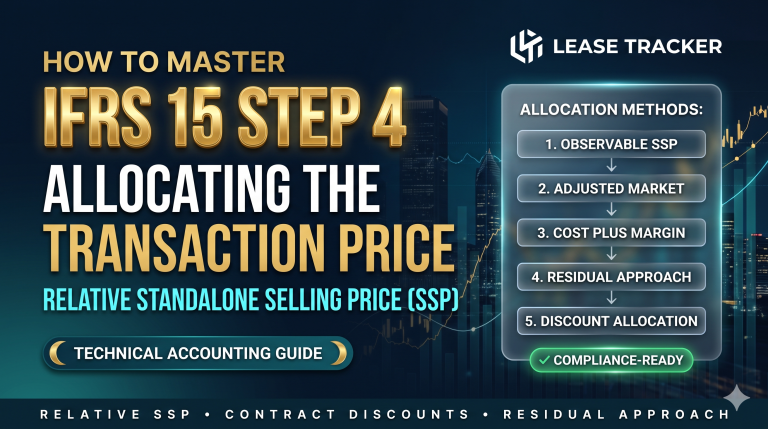
Once variable consideration is estimated and constrained in Step 3, the resulting transaction price is allocated in Step 4 across all performance obligations based on relative Standalone Selling Prices, unless paragraph 85 criteria are met to allocate the variable consideration entirely to a specific distinct performance obligation.
Are prompt-settlement cash discounts treated as financing or variable consideration?
Prompt-settlement discounts (e.g., “2/10 net 30”) are accounted for as variable consideration, not financing components. The entity must estimate upfront whether the customer will take the discount and record revenue net of expected cash discounts.